


The difference between Hojari frankincense and regular frankincense

difference between Hojari frankincense – The difference between Hojari frankincense and regular frankincense
When you first see similar-looking pieces of frankincense, choosing may seem simple. But with real use, the difference between Hojari and regular frankincense becomes clear in the scent, purity, how it melts, and even the value you get for the price. That’s why many customers ask before buying: does all Omani frankincense offer the same quality? The short answer is: no—and it’s a difference worth knowing before you choose.
What’s the difference between Hojari and regular frankincense?
Hojari frankincense is considered one of the finest types of Omani frankincense. It usually comes from specific areas in Dhofar, known for high-quality trees and natural conditions that produce a purer, more concentrated resin. “Regular” frankincense, on the other hand, is a broad label used for lower grades. It can still be good and beneficial, but it typically doesn’t reach Hojari’s level of clarity, scent, and strength.
The difference here isn’t just a brand name. For many users, Hojari is associated with a premium origin and top selection, while regular frankincense suits those looking for everyday use at a lower cost. This matters, because the “best” isn’t always the most suitable for everyone. Sometimes regular frankincense is more than enough, depending on how you plan to use it.
The difference between Hojari and regular frankincense in appearance and color
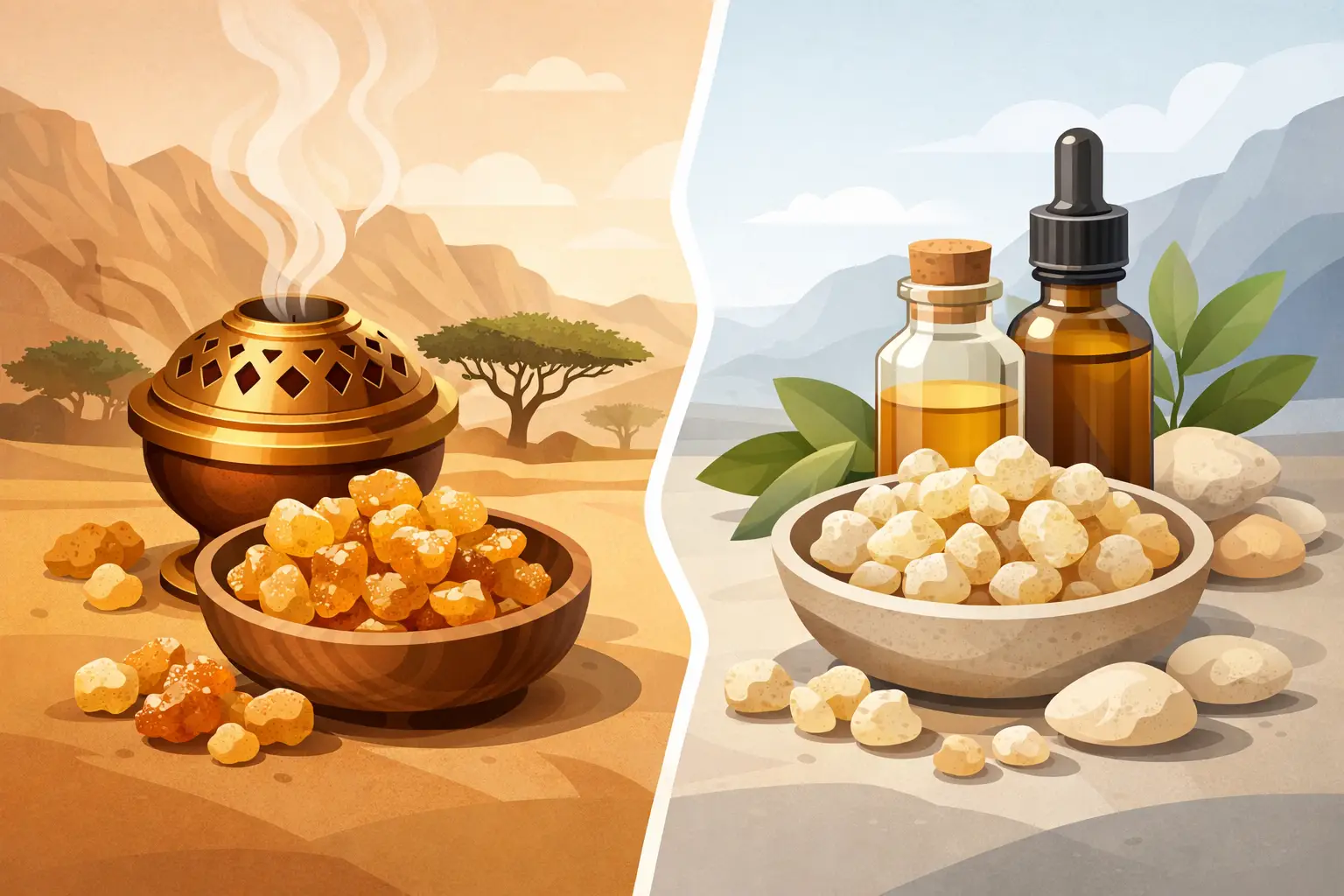
The first thing buyers notice is the look. Hojari frankincense is often light in color—ranging from off-white with a yellow tint to a relatively translucent light green—and its pieces tend to be cleaner and more uniform. This isn’t an absolute rule for every piece, but it’s a strong indicator in an initial assessment.
Regular frankincense, however, often leans darker—such as deep yellow or light brown—and may show more variation in piece size and purity. Minor impurities or a rougher outer layer are common in lower grades.
One important point: color alone isn’t enough for a final judgment. Some customers assume every light piece is Hojari, which isn’t accurate. Proper evaluation combines appearance, scent, source, and how it breaks and melts.
Scent is the difference users can’t miss
If you want a quick test, start with the scent. Hojari is usually known for a softer, fresher, cleaner aroma, with a clear fragrant character that makes it feel rich in natural oils. It’s not sharply overpowering—rather, it’s balanced and comforting, whether you chew it, soak it, or burn it as incense.
In comparison, regular frankincense may smell lighter or less complex, and sometimes closer to a traditional resin note without the aromatic depth Hojari is known for. That doesn’t mean it’s bad—it’s just less distinctive for those used to premium quality.
That’s why many customers notice the Hojari experience from the very first use—especially those who care about quality details and want authentic Omani frankincense that feels pure and special.
Purity, composition, and overall quality
Frankincense quality isn’t measured by appearance alone—it’s also about purity. Hojari is typically clearer and contains fewer natural impurities, and its composition is relatively richer in aroma and essential oils that give the experience its value. That’s why it’s seen as the best choice for anyone looking for the top grade.
Regular frankincense can still be 100% natural and suitable for use, but its level varies more from batch to batch and from one source to another. That’s where buying from a trusted seller matters—one that clearly and honestly states the type and source, because the name alone isn’t enough without transparency in sorting and sourcing.
Quality also shows in the overall feel during use. Hojari often gives a cleaner, calmer, more consistent impression, while regular frankincense is practical and acceptable but less luxurious as an experience.
Uses: Is Hojari always better?
Not necessarily—it depends on what you want. If you’re buying frankincense for chewing, soaking in water, or personal use where you care about the highest level of purity and scent, Hojari is usually the better choice. Many people also prefer it as a gift or when they want a product that reflects the authenticity and well-known Omani quality.
But if your goal is frequent daily use—like general incense burning or ongoing use in larger quantities—regular frankincense can be a practical, more budget-friendly option. Some customers simply don’t need the top grade every time, especially if the price difference matters to them.
This point matters because choosing the right type isn’t only about better vs. worse—it’s about what fits. Hojari is excellent, but regular frankincense can be a great match if your use is simple or your budget is limited.
Price—and why there’s a clear difference
It’s natural for Hojari frankincense to cost more. That comes down to its relative rarity, higher quality, strong demand, and the more precise sorting and selection process. You’re not just paying for a quantity of frankincense—you’re paying for a higher grade of origin, purity, and overall experience.
Regular frankincense is usually cheaper, which makes it appealing to a wide range of buyers. But it’s not an identical substitute for Hojari—it’s a different category that serves a different need. So it’s better to see the price as a reflection of the grade, not just a marketing difference.
The smart decision is to ask yourself: do I want the best possible, or do I want a good, practical option for frequent use? When the answer is clear, the price difference makes perfect sense.
How do you recognize Hojari frankincense when buying?
It takes simple but important observation. Look for relatively light, clean pieces that are similar in shape. Pay attention to the scent—it should be clear and pleasant, not dull. Also notice the level of translucency and the purity of the piece when you break it or examine it closely.
But more important than anything is the source. The market has many grades, and some are sold under general names that can confuse buyers. That’s why buying from a store that clearly explains the grading and relies on trusted sourcing from Oman gives you more confidence in what you’ll receive. At Allwaa Alakhdar, this is essential—because customers aren’t only looking for a 100% natural product, but for one with a clear origin that matches the description, with fast shipping and secure payment.
When should you choose Hojari, and when is regular enough?
Choose Hojari if you care about the details, value higher quality, and want authentic Omani frankincense for special personal use or gifting. It’s also a great option for those who’ve tried different types before and now recognize the value of the difference in scent and purity.
Choose regular frankincense if you want a good experience at a lower cost, or if your use is frequent and daily and doesn’t require the premium grade every time. Many customers start with regular and later move to Hojari when they want a higher level of quality.
There isn’t one choice that fits everyone. What matters is a clear need—and choosing the frankincense grade that matches it.
Does the difference show when soaking, chewing, or burning it as incense?
Yes, yes. Yes—often noticeably. When soaking, some users feel Hojari gives a cleaner aroma and a lighter, more pleasant taste. When chewing, many find the experience smoother in terms of scent and overall feel. And when burning it as incense, Hojari stands out in the quality of the fragrance—calmer, cleaner, and more refined compared to lower grades.
Still, it’s somewhat subjective. Some users may not notice a big difference if their experience is limited or the purpose is simple. That’s why personal use remains the best test—after confirming the source and quality.
A practical summary to know before you buy
If you’re looking for the highest grade of Omani frankincense in purity, scent, and luxury, Hojari is the closest match. If your goal is a good, practical natural product at a lower price, regular frankincense may do the job perfectly. The real difference isn’t just the name—it’s the experience you’ll get after buying.
The best way to choose is to be clear with yourself from the start: do you want the highest quality no matter the price, or do you want a good balance between quality and cost? Once you know the answer, you’ll know which type of frankincense suits you—with more confidence and peace of mind.
difference between Hojari frankincense
- Quality
- Natural
- Fast Delivery