


A Guide to Using Essential Oils Safely on Skin and at Home

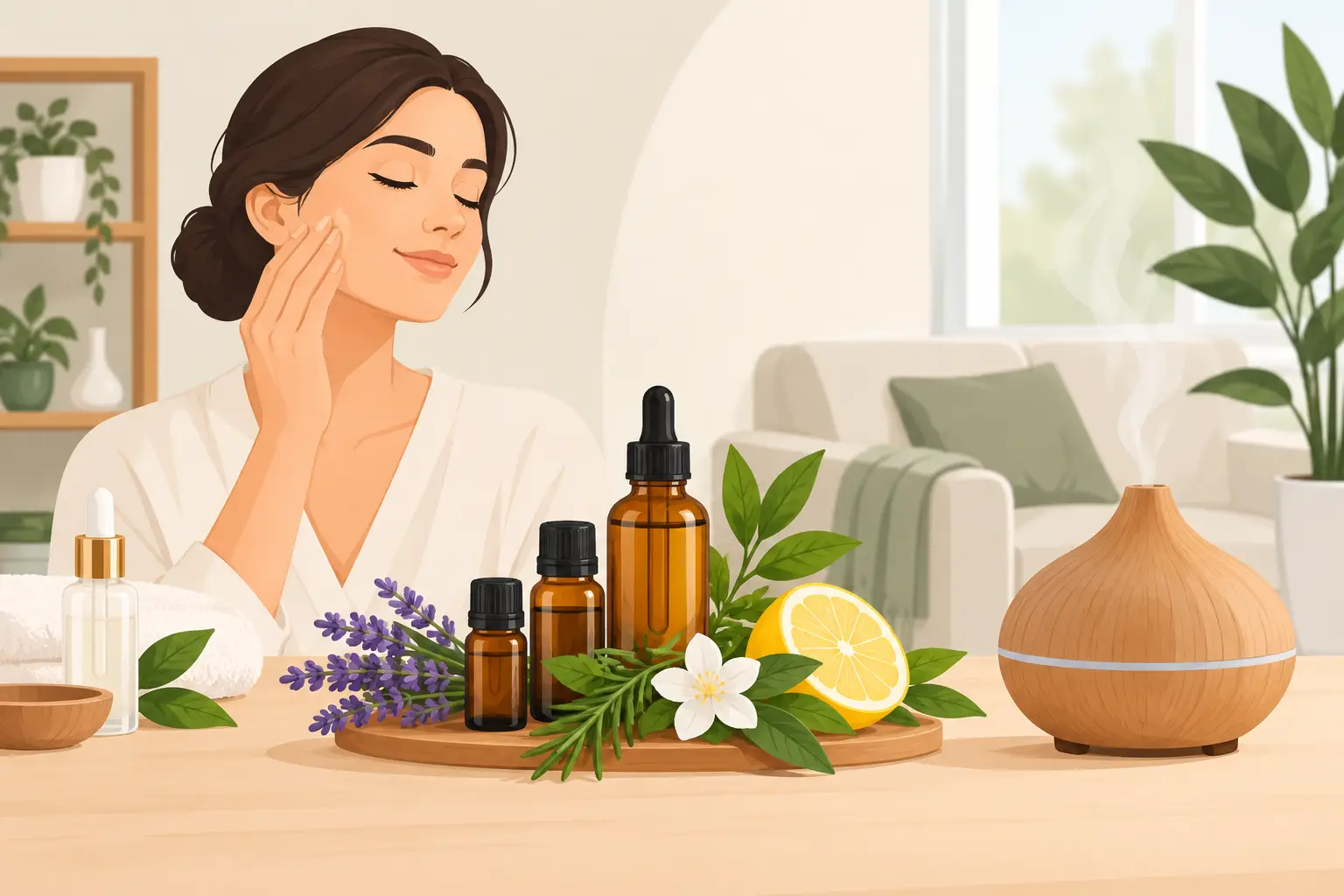
A single drop of essential oil might be enough to fill a room with a lovely scent or add a nice touch to your care routine, but it could also irritate your skin if used the wrong way. That’s why we put together this guide to using essential oils safely in a clear, practical way, to help you enjoy natural scents without overdoing it or taking any risks, whether your goal is personal care or freshening up your home.
Essential oils are highly concentrated, and they’re not like infused herbs or gentle plant oils. They’re extracted from aromatic plant parts such as flowers, leaves, peels, and wood, so their strength and effect vary from one type to another. Just because an ingredient is natural doesn’t automatically mean it suits every skin type or every way of using it.
What makes essential oils need extra care?
Essential oils contain powerful aromatic compounds at high concentrations. When applied directly to the skin, especially on the face or sensitive areas, they can cause redness, itching, or a burning sensation. Some citrus oils can also increase skin sensitivity to sunlight, while other scents can be bothersome for people with asthma, migraines, or fragrance sensitivities.
This doesn’t mean avoiding essential oils altogether, it means using them wisely. A good choice starts with knowing the source and ingredients, then sticking to a small amount and a method suited to the purpose. A carrier oil, like jojoba, sweet almond, or fractionated coconut oil, isn’t just an extra step in the recipe, it’s the basis of safe topical use.
A guide to using essential oils safely on the skin
Dilute first, don’t wait for irritation to show up
Never apply pure essential oil directly to your skin, even if your skin is used to natural products. For everyday use on the body, a low concentration of 1% to 2% is usually enough. In practice, you can start with 2 to 4 drops of essential oil per tablespoon of carrier oil.
The face needs even more caution, since its skin is thinner and more exposed to outside factors. If you want to add essential oil to a facial care oil, choose a lower concentration, ideally just one drop within an appropriate amount of a gentle carrier oil. For sensitive skin, or skin affected by eczema or rosacea, avoiding essential oils on the face altogether may be the safest and calmest choice.
Do a patch test before full use
A patch test is a simple step, but it can save you an uncomfortable experience. Prepare a diluted amount of the essential oil, then apply a little to a small area on the inside of your arm or behind your ear. Leave it and monitor the area for 24 hours.
If redness, itching, swelling, or a persistent stinging sensation appears, gently wash the area and stop using the oil. Don’t try to fix the irritation by adding water, since oil doesn’t mix with it. Use a carrier oil or a gentle cleanser to remove the residue, then rinse your skin if needed.
Don’t treat all oils the same way
Some oils require more caution than others. Cinnamon, clove, oregano, and peppermint oils can be harsh on the skin, so they’re not suited to casual use or concentrated homemade blends. Citrus oils, like lemon, bergamot, and grapefruit, can cause photosensitivity if used on exposed skin before sun exposure.
If you use a citrus oil on your body, avoid exposing the area to strong sunlight for at least 12 hours, and it’s best to choose products specifically designed for skin use with clear instructions. Also, don’t apply essential oils near the eyes, or inside the nose, mouth, or on cracked skin and wounds.
Using essential oils at home
A diffuser is one of the most popular ways to enjoy a scent without touching the skin. Even so, a room doesn’t need a large amount for the scent to come through. Start with just a few drops, and run the diffuser in short bursts rather than for hours on end in a closed space.
Ventilation matters, especially in children’s rooms or when elderly people or those with respiratory sensitivities are around. If anyone in the household feels uneasy, gets a headache, or feels nauseous from the scent, turn off the diffuser and open the windows. A scent that’s pleasant for one person can be overwhelming for another, so there’s no single amount that works for everyone.
Don’t add essential oils to devices the manufacturer doesn’t recommend using them with, and don’t apply them directly to sensitive wood or plastic surfaces, as they may leave a mark or react with the finish. When making a homemade spray, remember that oil and water don’t mix on their own, and the mist may leave concentrated droplets on furniture or floors.
Children, pregnancy, and pets
These cases call for a clear rule: less is better, and sometimes avoiding it altogether is the safer choice. Essential oils shouldn’t be applied directly to children or infants without guidance from a qualified specialist, and they shouldn’t be placed on their hands or near their faces, since they can easily touch their eyes or mouth.
During pregnancy or breastfeeding, it’s best to avoid trying new blends or strong oils without checking with a doctor or specialist first, especially if there’s a health condition or history of allergies. Bottles should also be kept out of children’s reach, since swallowing essential oil can be dangerous and may require urgent medical attention.
As for pets, don’t assume that what works for humans works for them too. Some oils and their scents can affect cats, dogs, and birds differently, and animals can be harmed by intense inhalation or by oil coming into contact with their fur. Use the diffuser in a well-ventilated space, leave room for your pet to leave if it wants to, and stop immediately if you notice coughing, lethargy, drooling, or a change in behavior.
Common mistakes that reduce safety
The problem usually starts with the idea that more is better. With essential oils, the opposite is closer to the truth: a little goes a long way. Don’t mix several strong oils into one blend just to vary the scent, and don’t add random drops to cream or shampoo without knowing the final amount and concentration.
Another common mistake is swallowing essential oils or adding them to water or juice. Internal use isn’t a safe thing to try at home, even if the oil is known for its flavor or plant-based origin. Likewise, don’t use an oil from an unknown source or a bottle without a scientific name, ingredients, or usage instructions, and don’t judge quality by scent alone.
To keep your oils in good condition, store them in tightly sealed, dark glass bottles, away from heat, sunlight, and moisture. Keep an eye on their scent and color over time, since oxidized or altered oil can increase the chance of skin irritation. Cleanliness matters too: don’t touch the bottle’s opening directly, and don’t pour leftover oil back into the original bottle.
How to choose an essential oil with confidence
Look for clear transparency in the product: the oil’s name, the plant part used, how to use it, warnings, and the country of origin when available. Essential oils aren’t an automatic substitute for medical treatment, and they shouldn’t be marketed as a guaranteed solution for a health or skin issue. Real quality shows in clear information and respecting the limits of use, not in big promises.
At Allwaa Alakhdar, we believe natural care starts with choosing authentic ingredients from a known source, then using them in moderation that suits your needs. A lovely scent doesn’t need to be overdone, and comfortable skin doesn’t need harsh experiments.
Choose your oil calmly, start with a diluted drop, and give your body a chance to tell you what works for it. This simple habit makes everyday care gentler and more reassuring, and keeps the enjoyment of natural products just as it should be.