


How to Choose Mountain Honey with Confidence

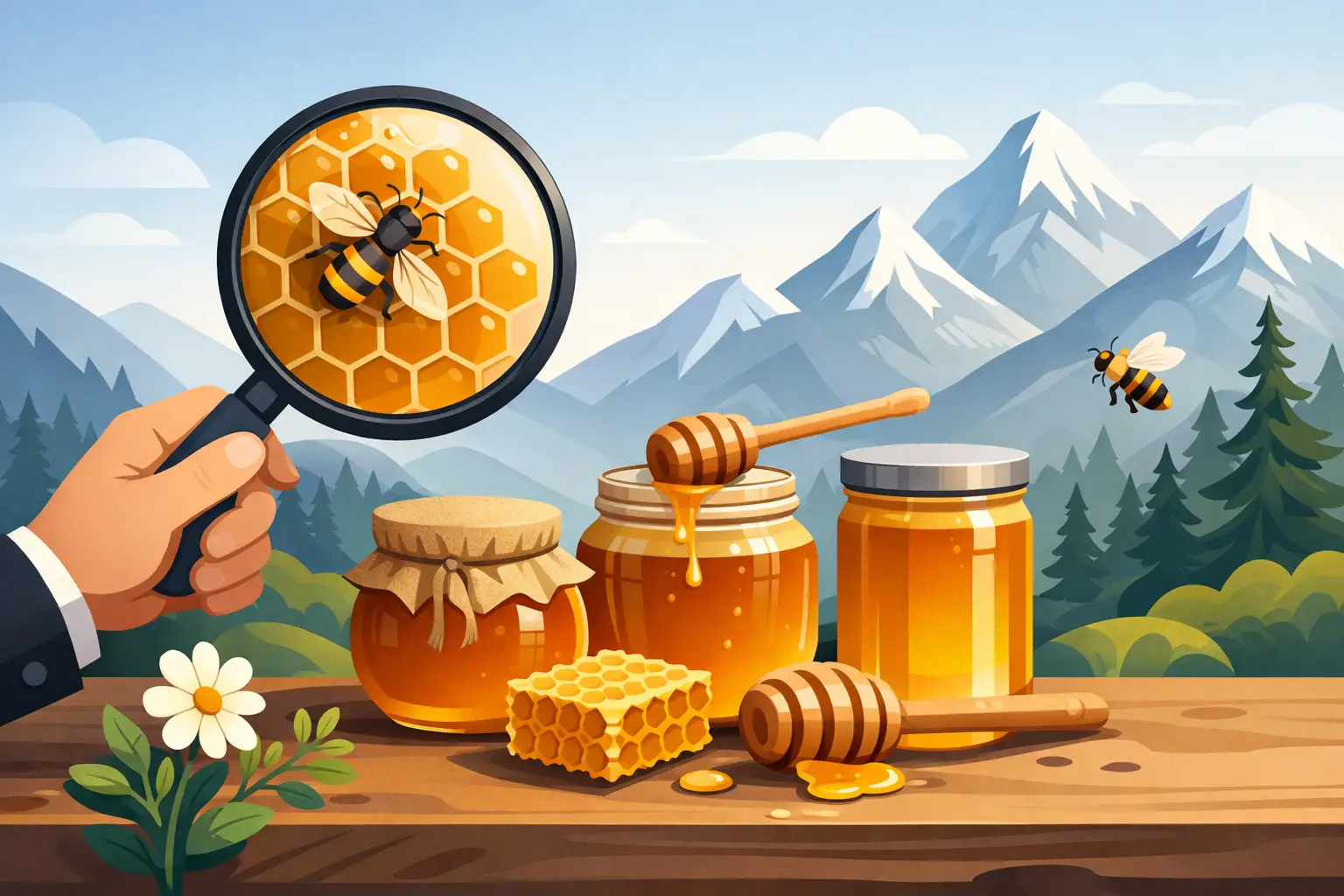
When you see more than one type of honey in front of you—with different prices and similar descriptions—the real question isn’t which one costs more, but how to choose mountain honey in a way that gives you real quality, not just an attractive name on the jar. Mountain honey appeals to many people looking for purity and benefits, but its true value isn’t judged by appearance alone—it’s in a set of details that start with the source and don’t end with the taste.
Mountain honey isn’t just a label. It usually means honey collected from mountain environments rich in wild plants and natural pastures, which shows in the aroma, composition, and flavor. But here’s an important point—not every honey labeled “mountain” is necessarily the same level of authenticity or purity. That’s why a smart choice depends on reading the product well and understanding the signs that separate trusted natural honey from honey that relies more on marketing than quality.
How to Choose Mountain Honey: Start with the Source
The first thing worth your attention is the source. Natural honey is directly tied to its environment, so the clearer and more specific the source is, the more confidence you can have in its quality. Ask about the country of origin, the region if possible, and whether it comes from known apiaries. Honey sold with a vague, general source leaves more room for doubt, while honey linked to a clear environment gives you a better sign of authenticity.
It’s also important to know whether the seller specifies the type of honey itself or just uses a general phrase like “natural honey” or “premium honey.” A precise description is a good sign, because a trusted product doesn’t rely on broad claims—it gives information that helps you make an informed decision. That’s why many buyers prefer dealing with an organized store that cares about details and presents the product clearly, especially when the focus is on 100% natural products with a known source.
Understand Color and Texture Without Quick Judgments
A common mistake is thinking dark honey is always better, or that light honey is lower quality. The truth is, honey color varies depending on the flowers, pastures, environment, and harvest time. You might find mountain honey in a light amber shade and another that’s much darker—both can be good. Color alone isn’t a final proof, but it becomes useful when it matches the declared type of honey.
The same goes for texture. Some people link quality only to very thick honey, but thickness is also affected by temperature and the nature of the stored nectar. Natural mountain honey is usually cohesive and balanced—not overly watery and not unnaturally gel-like. If it pours very quickly, it may make you wonder about moisture content or storage. And if the texture is artificially stiff, that doesn’t automatically mean it’s excellent.
Aroma and Taste Reveal a Lot
Natural honey has a clear aroma, but it shouldn’t be sharp or artificial. Mountain honey often carries a plant-like, floral, or herbal character that varies from one type to another. If the smell is very faint or closer to burnt sugar, it’s fair to be more cautious. Aroma isn’t a lab test, but it gives an important first impression.
As for taste, it should be rich and layered—not just a direct sweetness that disappears quickly. Good honey leaves a clear finish in the mouth, and it may carry a herbal or floral note, or even a slight bitterness depending on its source—and that’s normal. The goal isn’t for the taste to be identical every time, but for it to feel natural and balanced. A very flat flavor can point to an average product, even if it looks appealing.
Is Honey Crystallization a Good or Bad Sign?
Many customers worry when they see honey has crystallized or formed granules over time. In fact, crystallization in natural honey is very common—and in many cases, it can be a reassuring sign. It comes down to its natural sugar composition, the type of nectar, and storage temperature. So it’s not correct to treat crystallization as automatic proof of adulteration.
But it depends on the full picture. Natural crystallization is usually gradual and fairly even, while a separated look or unclear layers may be worth asking about. Most importantly, natural honey shouldn’t be judged by one detail alone. Color, texture, aroma, source, and how it’s presented all work together.
How to Choose Mountain Honey Based on Your Use
Not every mountain honey suits every purpose equally. If you’re buying it for daily use with breakfast or warm drinks, you may prefer a balanced flavor and an easy-to-use texture. But if you want a stronger character and a more concentrated taste, you might lean toward darker or thicker types.
That’s where asking about the product itself helps, instead of relying on the name alone. Some customers want honey for everyday tasting, while others care more about a special honey for gifting or seasonal use. There isn’t one option that fits everyone. The best choice is what matches your expectations and real use—not what just looks luxurious on the jar.
Pay Attention to the Packaging and Storage
A good product usually shows respect for itself through its packaging. A clean, well-sealed jar with a clear label gives an important impression of seriousness and transparency. Details like weight, country of origin, packing date, and store or supplier information all help you buy with more confidence.
Storage also affects your honey experience. Even excellent honey can lose some of its quality if it’s exposed to high heat or stored poorly. That’s why it’s best to buy honey from a seller that cares about fast shipping and proper packing—especially if you’re ordering online. Quality isn’t only about what’s inside the jar, but also how the product reaches you.
Don’t Let Price Alone Decide
Price matters, but it’s not the only judge. Natural mountain honey often isn’t the cheapest on the market, because its source, quality, and production method raise its value. On the other hand, a very high price doesn’t always mean it’s the best. Sometimes you’re paying for packaging or a brand name more than a real difference in quality.
It’s better to look at value. Does the product provide a clear source? Is the description precise? Is the seller trustworthy? Are customer experiences reassuring? These questions are more useful than comparing numbers alone. A smart shopper doesn’t just look for the cheapest option, but for a product that’s worth what they pay.
Signs That Reassure You When Buying Online
Buying honey online has become a convenient option for many customers inside the Gulf and beyond, but it needs extra attention. Look for a store that provides clear information, realistic photos, and an honest description without exaggeration. Transparency is essential here. When natural products are the focus, the details should be visible—not hidden.
Customer reviews help too, but it’s best to see them as part of the picture, not all of it. If you find a store that balances quality presentation, clear policies, secure payment, and customer service, these are strong signs of reliability. That’s why many shoppers prefer dealing with specialists in natural Omani products, like Allwaa Alakhdar, because they base the buying decision on authenticity and clarity more than general promises.
Common Mistakes When Buying Mountain Honey
Some buyers choose honey based on just one popular test, like watching how it drips from a spoon or dissolving it in water. These methods are common, but they aren’t enough on their own to judge quality. It’s also a mistake to think every honey that doesn’t crystallize is adulterated, or that every dark honey is excellent. Reality is more nuanced than these quick judgments.
Another mistake is buying large jars on your first try. If you’re trying a new type or a new store, start with a suitable size. This gives you a chance to evaluate the flavor, texture, and how well it suits you before buying again. Smart choices in natural products start gradually, not impulsively.
Good mountain honey makes an impression from the first use, but choosing it correctly starts before you open the jar. The more extra minutes you give yourself to review the source, description, and presentation, the closer you’ll be to buying natural honey that lives up to your trust and deserves its place in your home.