


How can I tell if mountain honey is genuine before buying?

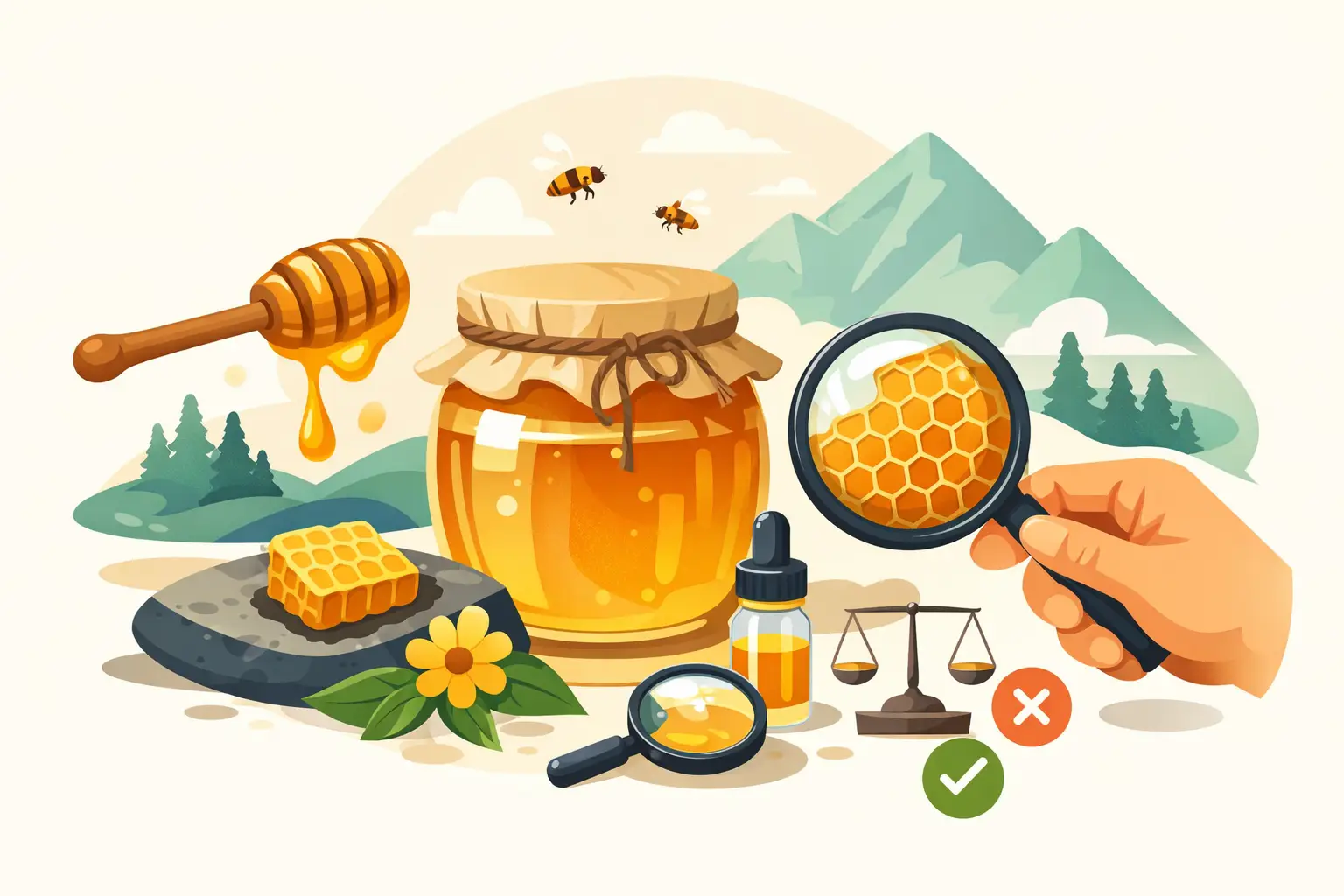
How can tell if – How can I tell if mountain honey is genuine before buying?
The most expensive mistake many buyers make isn’t buying pricey honey—it’s paying that price for a product that has nothing of genuine mountain honey except the name. That’s why the right question starts from the beginning: how can you tell if mountain honey is genuine in a practical, reassuring way, away from common myths and inaccurate tests? The answer doesn’t rely on one sign, but on a set of indicators that start with the source and end with how you verify it before use.
How to tell if mountain honey is genuine—start with the source
If you want a proper judgment, don’t start with color or thickness alone. Start with the source. Genuine mountain honey is often limited in quantity, tied to a specific season, and produced from a known plant environment—not a generic listing that repeats the same description on every jar. The clearer the seller is about the country of origin, region, forage type, and harvest season, the more confidence you can have in the product.
100% natural products don’t need exaggerated claims as much as they need clear transparency. When you find a product with precise details about sourcing, packaging, and storage, that’s stronger than any generic marketing claim. But honey sold with vague phrases like “premium mountain honey” with no details is worth pausing before you buy.
With Omani and Gulf products in particular, smart customers care about the environment the honey comes from, because plant diversity and mountain climate directly affect taste, aroma, and value. That’s what makes origin a matter of trust before it’s a matter of appearance.
Texture and color: helpful indicators, but not decisive
Many people assume real honey must be very thick or very dark. That’s incomplete. Texture changes depending on the flower type, temperature, and the honey’s natural moisture content. Some mountain honeys are indeed heavy, while others are less dense and still completely genuine.
The same goes for color. Mountain honey can be golden, amber, or darker. There isn’t one shade that proves authenticity. What helps more is an even color within the jar and the absence of an overly glossy, artificial look. Natural honey often looks “alive” and slightly varied—not overly polished.
If you notice very high runniness that looks like sweetened syrup, that’s a sign to be cautious—but it isn’t enough on its own. It’s better to treat texture and color as part of the overall picture, not final proof.
Does crystallization mean the honey is genuine?
Crystallization is one of the most misunderstood points. Yes, honey crystallizing can be completely natural, and it happens in many types of raw honey over time—especially in cold weather or depending on the natural sugar composition. But it’s not an absolute stamp of authenticity.
In other words, honey can crystallize and be genuine, and it can also stay liquid and be genuine. The difference depends on the type and how it’s stored. So don’t reject a crystallized jar right away, and don’t assume every crystallized honey is genuine without looking at the other indicators.
Aroma and taste: where honey’s character shows
Genuine mountain honey has a clear signature in aroma and taste. The smell is usually natural and connected to the plant forage—not just a flat sugary sweetness. You may notice floral, herbal, or light woody notes, depending on the region where the nectar was collected.
As for taste, it’s often layered rather than one-note. It starts with natural sweetness, then reveals deeper flavors and maybe a light aftertaste that lingers. This aftertaste is one of the signs noticed by people used to natural honey. Adulterated or diluted honey often gives an immediate, quick sweetness and then fades fast—more like a sugar solution than honey with real character.
But there’s an important point here too: tasting takes some experience, and it may not be enough for a first-time buyer. So don’t rely on taste alone—use it alongside source information and the product’s overall look.
Common at-home tests: what helps and what misleads?
Many tests spread online: putting honey in water, burning a stick after dipping it, the thumb test, or watching how it drips from a spoon. Some of these may give a first impression, but they aren’t solid scientific proof for a final judgment.
For example, honey dripping in a cohesive thread can happen with genuine types, but it can also happen with honey that has additives to increase viscosity. And not dissolving quickly in water doesn’t settle it either. Texture can be manipulated, so you shouldn’t base your decision on one kitchen experiment.
The most reliable approach is usually combining reputation, clear sourcing, consistent sensory qualities, and a known seller with a clear policy and support you can go back to. It’s less exciting than quick-test videos, but it’s safer when buying.
When do you need a lab test?
If you’re buying in large quantities, or looking for therapeutic or commercial use, a lab test becomes a smart option. Lab analyses reveal moisture and sugar levels, and any additives or signs of excessive processing. For everyday personal use, it’s usually enough to buy from a trusted store that provides clear information and known-source products.
A very low price is a sign you shouldn’t ignore
Genuine mountain honey usually isn’t cheap—and it’s not just marketing. It’s harder to harvest, available in smaller quantities, and more clearly seasonal than many commercial types. So when you see an unusually low price compared to the market, it’s worth asking questions before getting tempted.
That doesn’t mean a high price alone proves quality. Some products are overpriced without a real reason. But a reasonable price usually falls within a sensible range that reflects rarity, transport, packaging, and quality. If an offer looks too good to be true, it’s wise to double-check the description, source, and customer reviews.
Packaging and storage reveal a lot
Genuine honey can lose some of its quality if it’s stored or packaged poorly. So pay attention to the jar itself. Is it sealed well? Is the information printed clearly? Is there a packing or production date? Are the storage instructions reasonable? These details may not look exciting, but they reflect how serious the seller is.
Poor storage can also change texture or flavor, making the buyer think the issue is authenticity when it’s actually storage. It’s always best to store honey at a moderate temperature, away from humidity and direct heat, and not to use a wet spoon inside the jar.
How can I tell if mountain honey is genuine when buying online?
Online shopping needs more awareness because you can’t see the product in person. Here, trust in the store becomes a core part of the product’s quality. Look for a clear description, real photos, an easy-to-understand return policy, and secure payment options. These don’t prove authenticity on their own, but they greatly reduce the risk.
It also helps to read customer reviews thoughtfully, not quickly. Look for comments that describe the experience in detail: taste, aroma, packaging, shipping speed, and how well the product matches the description. General comments like “excellent” or “great” help only a little, while details reveal much more.
And when a store specializes in natural products and offers a clear identity, a known source, and responsive customer service, the purchase feels much more reassuring. That’s what many customers look for when choosing a trusted store like Al Liwaa Al Akhdar, where authenticity and clarity are part of the shopping experience itself—not just a slogan.
Reassuring signs vs. concerning signs
Reassuring signs usually show up in more than one place: a clear source, an honest description, a natural aroma, a balanced taste, and a reasonable price. Concerning signs include exaggerated claims, missing details, a very low price, or a product that looks unnaturally uniform in a way that doesn’t fit the nature of raw honey.
It’s also important to remember that natural honey isn’t exactly the same every time. It may vary slightly from season to season and from batch to batch. This limited variation isn’t a flaw—it can be a sign the product is truly natural and not manufactured to look identical every time.
The most important question isn’t only: Is it genuine?
Sometimes buyers focus on authenticity and forget what quality means for them. Even if the honey is genuine, it can differ in flavor, thickness, and use depending on the source and type. Some people prefer it for daily use, others look for a strong mountain taste, and others care more about how easy it is to use with foods or drinks. Choosing the right type is just as important as verifying it’s genuine.
That’s why the best buying decision doesn’t come from one quick test, but from a simple, clear understanding: where the honey came from, how it’s described, whether its characteristics seem reasonable, and whether you’re buying from a seller that gives you real confidence in both product and service. When you answer these questions calmly, it becomes much easier to tell the difference—and confusion turns into an informed purchase worthy of what you bring into your home.
How can tell if
- Quality
- Natural
- Fast Delivery