


Natural Skin-Brightening Serum: How Do You Choose the Right One?

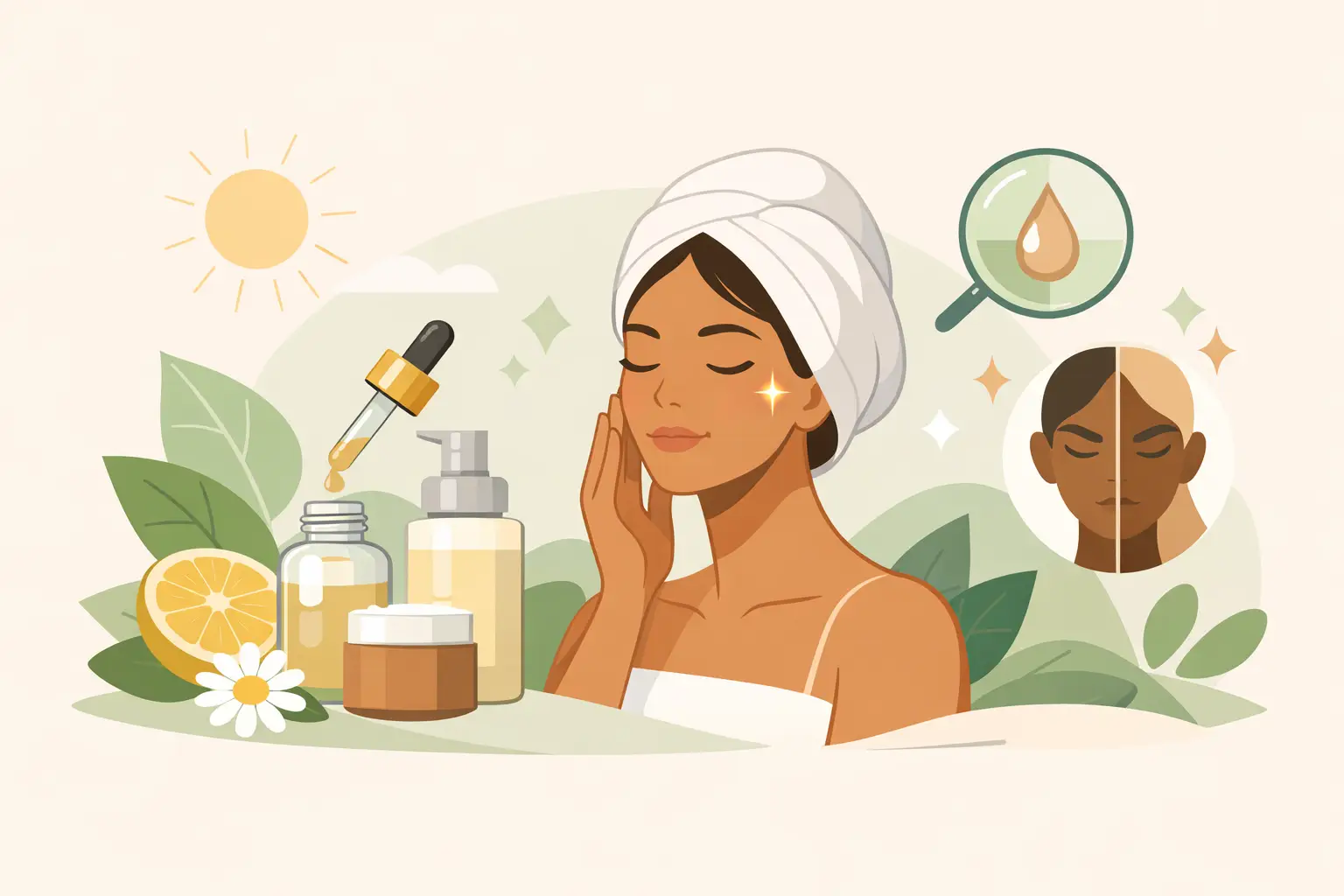
Natural Skin Brightening Serum: – Natural Skin-Brightening Serum: How Do You Choose the Right One?
When your skin looks tired despite good sleep and daily care, the issue is often not the color itself, but dullness, acne marks, and uneven pigmentation. That’s where the search for a natural skin-brightening serum begins—one that gives a noticeable glow without stressing the skin with harsh formulas or random use that can cause sensitivity and dryness.
The difference between healthy brightening and overdone lightening is very important. Your skin doesn’t need to become lighter than its natural tone—it needs to regain clarity and balance. That’s why a good natural serum doesn’t work through drastic change, but through gradual improvement: soothing, hydrating, supporting the skin barrier, then helping the skin look more even-toned and fresh.
What does a natural skin-brightening serum actually do?
A serum isn’t just a lightweight product. It’s a concentrated formula designed to reach the skin quickly and deliver active ingredients in a measured amount. When it’s natural and well-formulated, it helps reduce the look of surface pigmentation, sun damage, and acne marks, while improving overall radiance.
But realistic results need clarity. A natural serum won’t erase spots overnight, and it won’t give the same result for everyone. It depends on the cause of pigmentation, how long it’s been there, your daily routine, and how consistent you are with sunscreen. Without this realistic view, even a great product can feel disappointing simply because expectations were higher than what’s possible.
How do you choose the right serum for your skin type?
Choosing a serum doesn’t start with a marketing promise—it starts with your skin’s condition. If your skin is dry, you need a formula that combines brightening and hydration, because dryness alone can make your tone look darker and less lively. Oily or combination skin usually benefits from a lightweight, fast-absorbing serum that doesn’t leave an uncomfortable layer or clog pores.
Sensitive skin needs extra caution. Not everything “natural” is necessarily suitable for easily irritated skin. Some essential oils or highly concentrated formulas can cause redness for some people, even if they’re from a natural source. That’s why it’s better to choose a serum with ingredients known for being gentle, and do a simple patch test on a small area before regular use.
If the main issue is acne marks, look for a formula that focuses on soothing along with brightening ingredients. If the cause is sun exposure or uneven tone around the mouth and forehead, then daily consistency and protection become the priority—because any daytime neglect slows results no matter how good the serum is.
Natural ingredients worth paying attention to
When you read any formula, don’t just look at the big name on the bottle. What matters most is the logic of the ingredients and how they work together. Some natural extracts are known to support clearer-looking skin gradually, such as frankincense, aloe vera, and some lightweight plant oils, along with antioxidant botanical ingredients that help the skin resist factors that increase dullness.
Omani frankincense holds a special place in both traditional and modern skincare—not only for its authentic heritage, but because its use in skincare products is often linked to soothing, improving overall appearance, and supporting radiance. When it’s part of a balanced formula, it can be a good option for anyone looking for natural care from a trusted source.
There are also botanical extracts that help hydrate the skin and improve its texture—and this is a core part of real brightening. Hydrated skin looks clearer and more even even before spots start to fade. So don’t separate brightening from hydration; they work together more than many people think.
Ingredients to approach with awareness
Some products confuse strength with effectiveness. You’ll find very high concentrations or too many blends in one bottle, and the result can be irritation instead of improvement. Even with natural products, more isn’t always better. If your skin is sensitive or you’re new to serums, it’s best to choose a clear, relatively simple formula.
Also, strong fragrance isn’t a sign of quality. A nice scent can be pleasant, but it’s not what delivers results. What truly matters is a clean formula, how well it suits your skin, and sticking with it without stopping because of stinging, dryness, or sudden breakouts.
How to use a serum for better results
The best time to use a serum is usually after cleansing your skin and gently drying it. Apply a small amount and spread it over the face, or specifically on pigmented areas, according to the product instructions. There’s no need to overapply—serums are designed to be concentrated, and more doesn’t mean faster results.
Next comes moisturizer, and in the morning, sunscreen. This step isn’t extra or optional for anyone looking for real brightening. The sun is one of the biggest reasons pigmentation returns and worsens. You might use the best natural skin-brightening serum, but without daytime protection, results will stay limited or slow.
If your skin is sensitive, start gradually. Every other day may be suitable at first, then move to daily use if your skin tolerates it. This approach gives you a chance to notice how your skin responds instead of introducing the product too strongly and then stopping quickly.
When do the results show up?
That’s a fair question, and an honest answer is better than any exaggeration. Some people notice an improvement in radiance and texture within two to four weeks, but more noticeable pigmentation may take longer. Results vary depending on how old the spot is, the supporting care, and your skin type.
If you’re looking for safe, gradual improvement, patience is part of the plan. But if pigmentation is very severe, deep, or linked to hormonal changes, you may need a broader evaluation and a more specialized routine. A serum helps a lot, but it isn’t a standalone solution separate from the other factors.
Common mistakes that reduce a serum’s effectiveness
One of the most common mistakes is switching products too quickly. Using a serum for just a few days and then judging it doesn’t give a fair picture. Also, over-exfoliating during a brightening phase can weaken the skin barrier and increase sensitivity, making the tone look worse instead of better.
Another mistake is combining too many products in the same routine. When active layers pile up, it becomes hard to know what helped your skin and what irritated it. Thoughtful simplicity often delivers better results than an overloaded routine.
Too little sleep, not drinking enough water, and long sun exposure all affect skin clarity. A serum isn’t a replacement for overall care—it’s a smart part of it. The more balanced your daily routine is, the clearer the product’s results will appear.
How do you spot a trustworthy product?
A good product reassures you from the first read: an understandable formula, clearly listed ingredients, and realistic claims that don’t promise a complete change in days. The source of ingredients also makes a difference for many customers—especially those who prefer 100% natural products and look for authenticity and purity above all else.
Trusted brands usually also care about the customer experience after purchase, because trust isn’t only about the product. Details like good packaging, secure payment, fast shipping, and a clear policy make the buying decision easier and reduce hesitation. This matters especially in personal care, where people want results and a smooth experience together.
In a store like Alwaa Alakhdar, this balance between natural authenticity and practical choice is what matters to a wide range of customers in the Gulf and beyond. The idea isn’t just buying a serum—it’s buying a product whose source you know and feel confident about.
Is a natural serum suitable for everyone?
In general, it suits a wide range of people, but not in the same way. Anyone with very reactive skin or active skin conditions needs extra attention. Pregnant or breastfeeding women are also better off reviewing the ingredients of any product before using it daily, even if it’s natural.
If your skin is used to strong products, you may find a natural serum slower. That isn’t necessarily a weakness—it can be part of its advantage for anyone who wants gradual results with more comfort for the skin. If you’re looking for a long-term routine that maintains freshness without daily stress on the skin, a natural serum is often a sensible, practical choice.
When is buying a smart decision?
It becomes a smart decision when you know exactly what you want from the product. If your goal is to even out skin tone, reduce dullness, and support radiance with a gentle formula, a natural serum is worth trying. But if you’re expecting very sharp, very fast lightening, you may need to reset your expectations before buying.
The best choice isn’t the most famous—it’s the one closest to what your skin needs. Ask yourself: Do I need hydration along with brightening? Is my skin sensitive? Am I consistent with sunscreen? These simple questions save you a lot of guessing and bring you closer to results you’ll truly be happy with.
If you’re thinking of adding a natural skin-brightening serum to your routine, start with a clear foundation: choose trusted ingredients, use it consistently, and give your skin its natural time to improve. Skin responds best to gentle, steady care—and that’s often the difference between a temporary result and lasting comfort.
Natural Skin Brightening Serum:
- Quality
- Natural
- Fast Delivery