


What’s the best natural hair oil for your hair type?

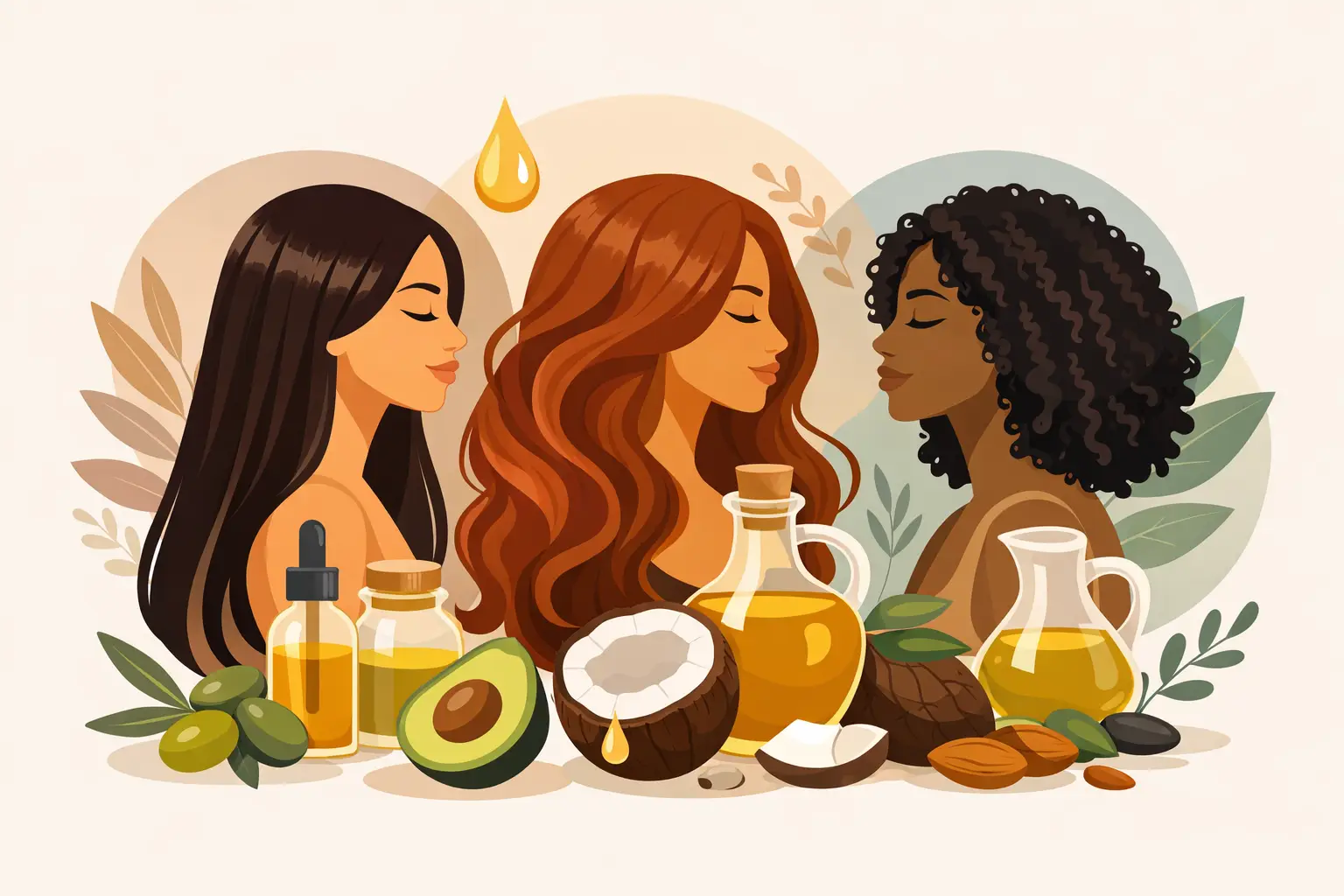
When you ask what the best natural hair oil is, the honest answer isn’t one name that fits everyone. Dry hair doesn’t need what oily hair needs, and a sensitive scalp won’t react to oils the same way as split or dyed hair. That’s why the right choice starts with understanding your hair type first, then choosing a pure natural oil with a known source—because quality makes a clear difference in the results.
With natural care, the problem isn’t a lack of options—it’s having too many. Many people use whatever oil is available and then say oils don’t work, when the truth is the oil may be too heavy, too light to treat dryness, or simply not suitable for the scalp. That’s why it’s better to see oils as different solutions, not one product for every case.
So what’s truly the best natural hair oil?
If you want a short answer, argan oil, coconut oil, castor oil, sweet almond oil, and olive oil are among the top natural oils for hair. But which one is best depends on your goal: hydration, less frizz, fuller-looking hair, or a calmer scalp. That’s where the real differences start.
Argan oil is great for anyone looking for softness and shine without a heavy greasy feel. Coconut oil is known for coating the hair and reducing dryness, but it doesn’t suit every scalp. Castor oil is popular for those who care about a fuller look, but it’s heavy and needs thoughtful use. Sweet almond oil is a gentle, balanced option, especially for normal to dry hair. Olive oil remains a classic, effective choice for nourishment and elasticity—especially for coarse or very dry hair.
Choosing an oil based on your hair type
For dry and brittle hair
Dry hair needs a rich oil that keeps it soft and reduces the look of split ends. Coconut oil, olive oil, and argan oil stand out here. Coconut oil works well as a pre-wash oil treatment because it helps reduce moisture loss. Olive oil is excellent if your hair is coarse or lacking elasticity. Argan oil suits anyone who wants lighter hydration with noticeable shine.
If your hair is dry but naturally fine or soft, using too much oil can leave it weighed down. In that case, a small amount of argan oil or sweet almond oil is often better than heavier oils.
For oily hair
This is where the most common mistake happens. Many people think oily hair doesn’t need oil at all, but that’s not accurate. Oily hair may need a light oil on the ends only—especially if the ends are dry from heat or dye. Argan oil or jojoba oil (if available) are usually the best fit, as they’re lighter than many others.
Applying large amounts of castor or olive oil to an oily scalp can increase the heavy feeling, make washing harder, and may be uncomfortable for anyone who gets buildup quickly.
For hair loss or weak hair
There’s no magic oil that stops every cause of hair loss, because shedding can be linked to diet, hormones, stress, or lack of proper care. But some oils help improve the hair environment, support scalp care, and reduce breakage. Castor oil is one of the most commonly used for this purpose because it’s thick and can give a good impression of fuller-looking hair—especially when used regularly in moderate amounts.
Sweet almond oil or argan oil can also be used if the hair is weak and breaks easily, because the goal here isn’t only the scalp—it’s also protecting the hair length from dryness and daily damage.
For dyed or heat-exposed hair
Dyed hair needs an oil that maintains softness and reduces stress from coloring, blow-drying, and straighteners. Argan oil is one of the best options here because it leaves hair feeling softer without weighing it down too much. Coconut oil can be used before washing for deeper care, while avoiding overuse if the hair is fine or the scalp is sensitive.
The best natural hair oils—and when to use each one
Argan oil
A practical choice for anyone who wants balanced results. It helps soften hair, calm frizz, and add healthy shine. Suitable for dry, normal, and dyed hair, and it usually doesn’t feel heavy when used in a small amount. Many people prefer it as a leave-in oil on the ends after showering.
Coconut oil
Suitable for dry, thick, and damaged hair. It provides noticeable nourishment when used before washing, but it may not suit everyone’s scalp—especially if it’s oily or easily irritated. It’s usually best to start on the ends and lengths, then watch how your hair responds.
Castor oil
Thick and rich in texture, so it’s usually used in small amounts or diluted with a lighter oil. It suits anyone focusing on sparse areas or a fuller look, but for many people it’s not the best daily oil for the whole head of hair. It needs thorough washing, and it can be too much for very fine hair if used on its own.
Sweet Almond Oil
A gentle, easy-to-use oil that tends to suit many hair types. Helpful for softness and reducing mild to moderate dryness. If you’re new to natural oils, it’s often one of the most comfortable options to start with.
Olive oil
One of the oldest oils used for hair, and it still holds its place for a clear reason. It provides very good nourishment for dry, coarse hair and works well as a pre-wash oil treatment. But it can be heavy on fine hair or an oily scalp, so it doesn’t suit everyone in the same way.
How do you know an oil suits you?
The best oil isn’t the one you hear about most—it’s the one that benefits your hair without annoying side effects. If you notice your hair becomes softer, easier to style, and less frizzy after using it, that’s a good sign. But if it becomes uncomfortably greasy, your scalp starts itching, or washing becomes very difficult, then either the oil isn’t right for you or you’re using too much.
Quality matters too. Pure natural oil is different from products mixed with strong fragrances or unclear additives. That’s why it’s always best to choose 100% natural products from a trusted source—because purity reflects in both safety and results.
The right way to use oil
Many weak results aren’t because of the oil itself, but because of how it’s used. For dry hair, apply oil to the lengths and ends for 30 minutes to 2 hours before washing. For oily hair, it’s best to stick to the ends or use a very small amount. And if your scalp is sensitive, it’s wise to test a small amount first before applying it more broadly.
It’s not necessary to leave oil in your hair overnight. That works for some people, but it’s not a rule. Sometimes a short time with consistent use gives better results than leaving it for long hours and then struggling to wash it out.
It’s also important not to overdo it. Hair benefits from consistency more than excess quantity. A few drops after showering may be enough for fine hair, while thick hair may need a deeper oil treatment once or twice a week.
When isn’t oil alone enough?
If there’s severe shedding, persistent dandruff, chronic itching, or clear scalp irritation, you shouldn’t expect oil to carry more than it can. Oil is an excellent care product, but it’s not a substitute for identifying the cause when the issue is ongoing or getting worse.
Also, if your hair is exposed daily to high heat, frequent dyeing, or harsh shampoos, oil won’t give the best results unless those habits change too. Natural care works best when it’s part of a balanced routine—not a last-resort rescue attempt.
What’s the best natural hair oil for a safe, clear result?
If you want an easy option that suits most cases, start with argan oil or sweet almond oil. If your hair is very dry or coarse, try coconut oil or olive oil before washing. And if your focus is a fuller look and intensive care for certain areas, castor oil may work—but use it moderately.
The simplest rule is this: fine hair needs lightness, dry hair needs richness, and a sensitive scalp needs a gradual, careful approach. And when you choose a pure natural oil from a trusted source, the result is closer to what you’re expecting. At Al Liwa Al Akhdar, that’s the foundation—clear authenticity, natural quality, and care in products that give your hair reassuring care without complications.
In the end, your hair doesn’t need big promises as much as it needs a smart, consistent choice. Start with what suits its type, watch how it responds, and give it a little time with regular natural care—you’ll notice the real difference comes from the right simplicity, not from having too many products.