


The Best Types of Omani Frankincense and How to Choose the Genuine One

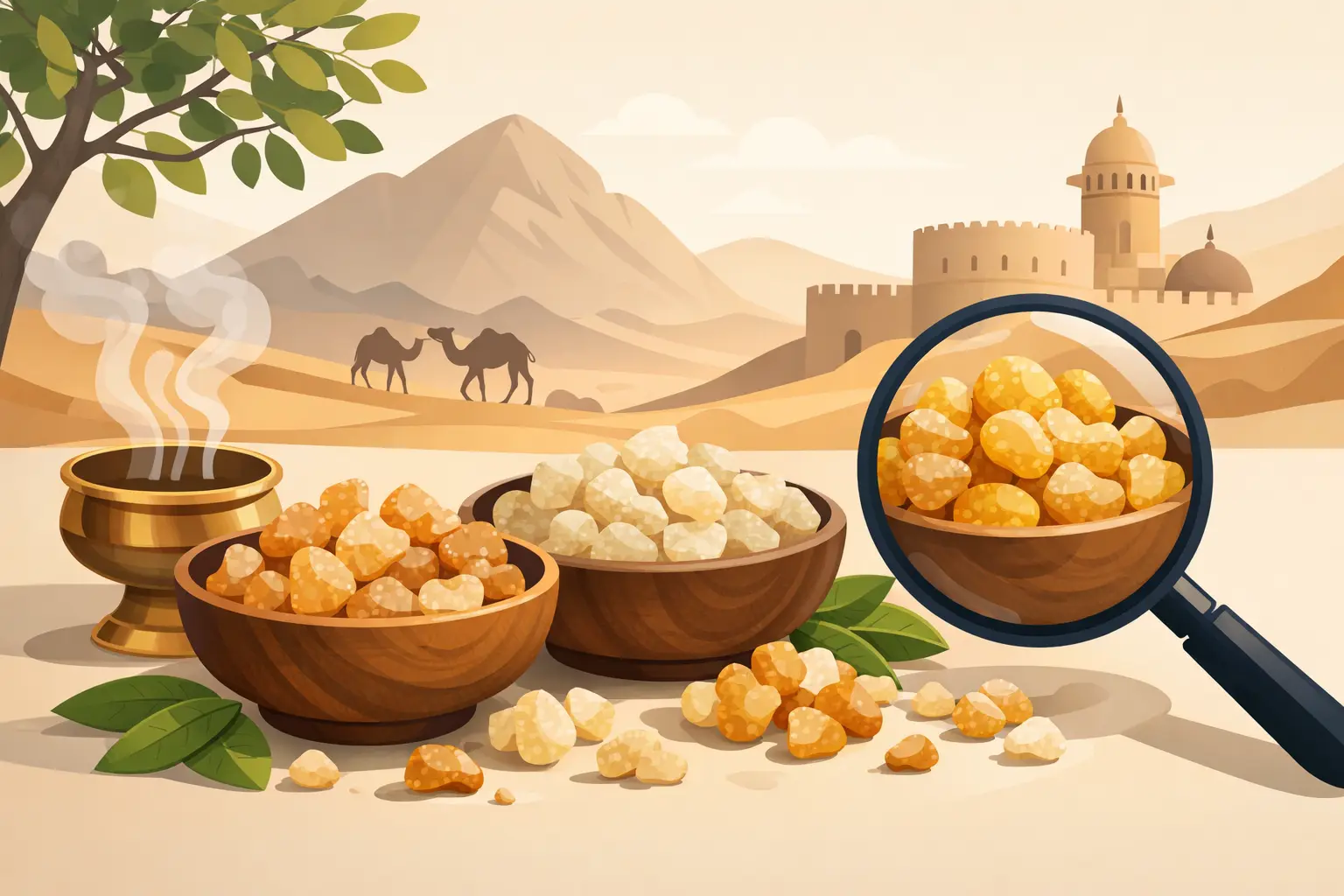
When you see Omani frankincense in front of you for the first time, it may look similar in shape, but the real difference shows in the scent, color, level of purity, and even the feeling it leaves after use. That’s why knowing the best types of Omani frankincense isn’t just a matter of taste—it’s an essential step if you’re looking for genuine quality and clear benefits, whether for daily use, burning as incense, soaking, or natural care.
Omani frankincense isn’t just one type—it comes in grades and varieties that differ by region, the nature of the tree, harvest time, and sorting quality. What especially sets frankincense from Dhofar apart is its strong reputation for purity, rich aroma, and high demand inside and outside the Gulf. But not everything sold in the markets is at the same level—and that’s where the difference between a regular purchase and a smart one begins.
What makes some types better than others?
Frankincense quality isn’t measured by the name alone. Several factors matter, most importantly the color of the pieces, their clarity, how few impurities they have, how long the scent lasts, and how it’s stored after harvesting. The cleaner, more solid, and more naturally fragrant the frankincense is, the higher its value usually is.
Use also plays an important role. Some people want frankincense for chewing, others for soaking and drinking, while many prefer the stronger type for burning and scenting the space. So there isn’t one answer that fits everyone. “Best” here means best for your needs—not just the most expensive.
The most well-known types of Omani frankincense
Hojri frankincense
Hojari is the most commonly mentioned name when premium Omani frankincense comes up, and it’s often the first choice for those looking for top quality. It’s known for a light color that sometimes leans green or clear off-white, with pieces that look purer and more consistent than lower-grade types. Its scent is clean and distinct, and the difference shows quickly when soaked or chewed.
This status comes from its source in specific areas of Dhofar, where natural conditions help produce a more distinctive resin. For that reason, Hojari is seen as the best option for anyone who wants an authentic experience—whether for personal use or as a premium gift. Still, it’s important to note that the word “Hojari” is sometimes used broadly in the market, and not everything sold under that name is at the same level.
Najdi frankincense
Najdi comes after Hojari in popularity for many buyers, and it’s a good option for those who want a balance between quality and price. Its color is usually a bit darker, its scent is pleasant, and it can be very suitable for burning and everyday use. It doesn’t always have the same clarity as Hojari, but it remains in demand and has a wide audience.
This type suits anyone who uses frankincense frequently and doesn’t necessarily need the highest sorting grade. And if the supplier is trustworthy, Najdi can be a very practical choice in terms of value for money.
Shazri frankincense
Shazri is also well known in the Omani and Gulf markets. It’s often lower than Hojari in sorting grade and price, but it’s still suitable for a large group of users. Some prefer it for burning or general use, especially when the goal is to enjoy a pleasant scent without focusing on the highest standards of appearance and clarity.
The difference here isn’t that Shazri is weak—it’s that its commercial grade is different. That’s why it’s best seen as a good budget-friendly option if it’s from a genuine, clean source.
How do you choose the right type for you?
If your goal is the best experience in terms of purity, scent, and appearance, Hojari is usually the closest match. If you want frequent daily use with a more balanced cost, Najdi or Shazri may be more suitable. It comes down to how you’ll use it—not just the type label.
For chewing or soaking, many people prefer cleaner, lighter-colored pieces with fewer impurities. For burning, buyers may focus more on how stable and far-reaching the scent is. In some cases, it’s better to buy a small amount first to test the scent and quality before ordering a larger quantity—especially if you’re buying online.
Signs of genuine Omani frankincense
With so many options available, it becomes important to tell genuine frankincense apart from imitations or weak grades. Genuine Omani frankincense usually has a natural, clear scent with no artificial note or added fragrance. The pieces don’t look overly shiny, and they aren’t perfectly identical as if manufactured—rather, they have a natural look with slight variation in size.
Color is also an indicator, but it shouldn’t be the only thing you rely on. Some of the best grades are light and relatively transparent, while other genuine grades are a bit darker depending on the type and sorting. What matters most is overall cleanliness, minimal dust and impurities, and a clear scent when you open the pack.
One sign that makes buying more reassuring is having a known product source, with a clear description of the type and origin, and confidence-building policies like secure payment and fast shipping and clear customer support. These details aren’t just for show—they truly matter when you’re buying a natural product whose quality can vary from one supplier to another.
Does a higher price always mean better quality?
Not always, but it often gives only an initial signal. Some types cost more because they really are higher grade, while in other cases the price is influenced by packaging, presentation, or the type name used in marketing. That’s why it’s wise to look at the price alongside the source, description, photos, and the store’s reputation—not in isolation.
With natural products in particular, real quality shows through repeated use. If you find frankincense with a consistent scent, good purity, and proper storage, that’s real value even if it isn’t the most expensive on the market. But if a product is pricey yet full of impurities or weak in scent, the price doesn’t mean much.
The best types of Omani frankincense by use
If you’re looking for frankincense to drink after soaking, the best choice is usually a clean, high-grade sort, because purity matters a lot here. If your main use is burning, you can be more flexible as long as the product is genuine and its scent is clear. And for those who prefer chewing, firmer, cleaner pieces with less bitterness are more desirable.
Many customers make the mistake of buying a very premium type for a use that doesn’t need that level, or buying a budget type and then expecting the same excellent Hojari performance. The right choice starts with understanding the purpose, then matching the type to it.
Why do many people prefer Omani frankincense from Dhofar?
This reputation didn’t come from nowhere. Dhofar is historically known as one of the most important frankincense-producing regions, and that heritage has translated into precise local know-how in harvesting, sorting, and storage. When the product comes from a trusted source in Oman, the chance of getting genuine, clean frankincense is much higher.
That’s what makes specialized stores safer than random buying—especially when the focus is on authentic natural products, the description is clear, and the service feels reliable. At ALLWAA ALAKHDAR, for example, this trust is tied to a simple, clear idea: 100% natural products, with attention to source and quality, and an organized service that suits buyers inside and outside the Gulf.
Common mistakes when buying frankincense
The most common mistake is relying on appearance alone. A buyer may be drawn to a certain color and assume it’s enough proof of quality, when in reality scent, cleanliness, and source are just as important. The second mistake is buying a large quantity on the first try without testing the type.
Some people also confuse the type name with the sorting grade. Hojari itself can come in different grades, and the same goes for other types. That’s why it’s always better to ask about the grade, the right use, and how to store it, rather than settling for a general name.
How to store frankincense to keep its quality
Even the best types can be affected if stored improperly. Frankincense needs a dry place, away from humidity and direct heat, and it’s best kept in an airtight container. Good storage preserves the scent and prevents the pieces from clumping or changing over time.
If you’re buying an amount that will last a long time, it’s better to divide it into smaller containers for gradual use. This helps keep the unused portion in better condition, especially in hot weather.
Choosing good Omani frankincense doesn’t require complicated expertise, but it does require attention to small details that make a big difference in the result. When you start with a trusted source and know exactly what you want, buying frankincense becomes a reassuring and rewarding experience—not just a gamble among many options.