


Raw or Pasteurized Honey? The Real Difference

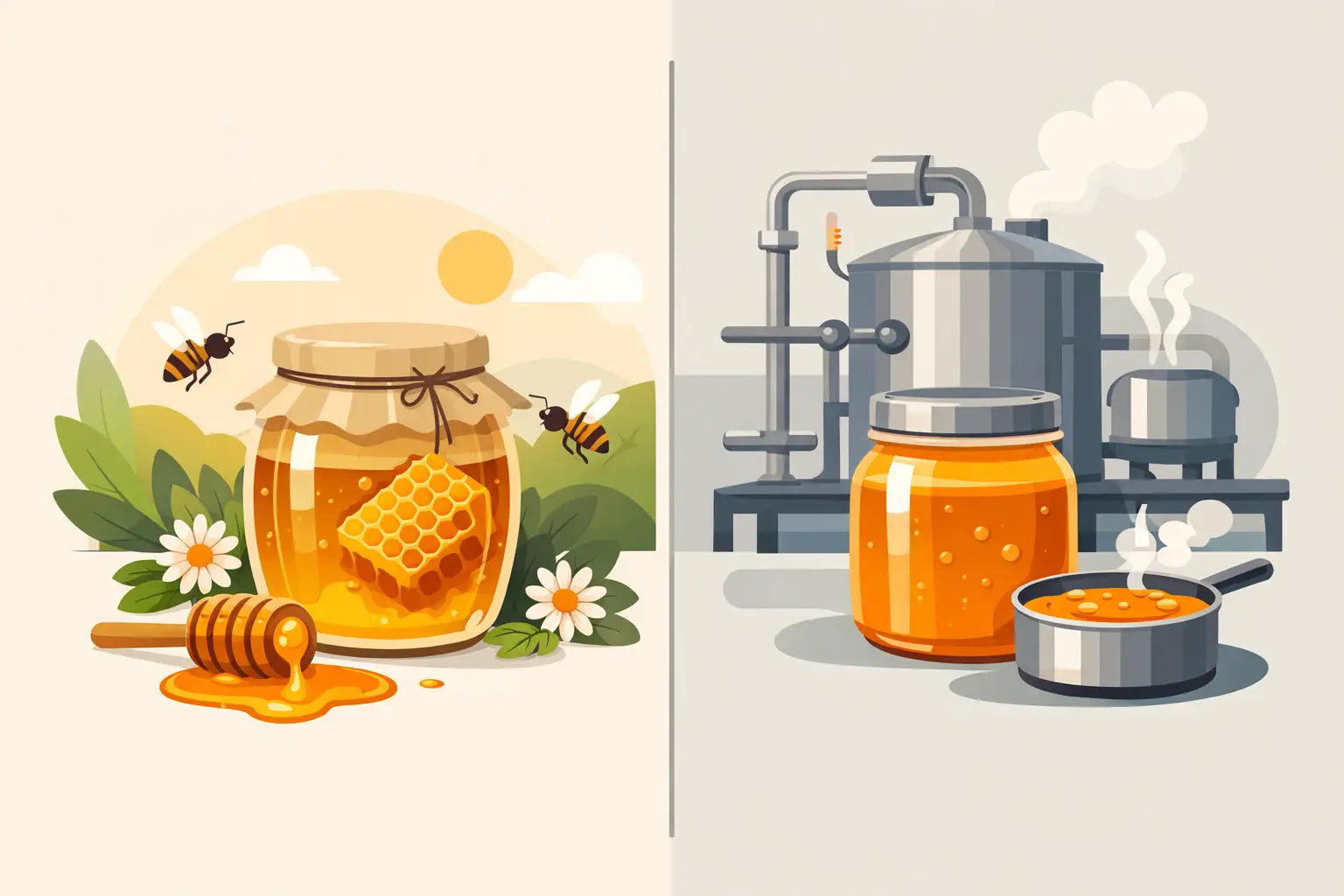
When you see two similar jars on the shelf and the question is: raw or pasteurized honey, the difference isn’t just in the name. What really matters is how the honey was processed after extraction, what natural properties remain in it, and how it will suit your daily use—whether for eating, beverages, or natural care recipes.
At ALLWAA ALAKHDAR, we know that today’s customer isn’t just looking for sweet-tasting honey, but for a clear origin, reliable quality, and a 100% natural product that gives them greater peace of mind when purchasing. That’s why understanding the difference between the two types helps you make a more precise choice, especially if you prefer products closer to their natural state.
What’s the Difference Between Raw and Pasteurized Honey?
Raw honey is honey extracted from the hive and then usually filtered simply to remove large impurities like wax pieces, without exposing it to high heat that would noticeably alter its original nature. For this reason, it remains closer to its natural form in terms of texture, aroma, color variation, and the possibility of crystallization over time.
Pasteurized honey, on the other hand, is exposed to relatively higher heat and then packaged in a way that gives it a more uniform appearance and fluidity for a longer period. This processing doesn’t necessarily mean it’s bad honey, but it does change some of its characteristics compared to raw honey, especially in appearance, texture, and some heat-sensitive natural compounds.
The difference here isn’t black and white. Simply put, each type has a different commercial and consumer purpose. If you want honey with the least possible intervention, you’ll likely lean toward raw. And if you prefer a clear appearance that’s easy to pour and stays stable on the shelf for a while, you might find pasteurized more suitable.
Raw or Pasteurized Honey in Terms of Natural Value?
When many people choose raw honey, they do so because it’s closer to the source. This matters to those who value purity and authenticity, especially with growing awareness about food sources and production methods. Raw honey usually retains a larger portion of its natural properties related to enzymes, concentrated aroma, and fine pollen grains that may remain in it depending on the degree of filtration.
In contrast, pasteurization is often used to improve visual stability and reduce the speed of crystallization. But it may affect some heat-sensitive elements. For this reason, those looking for an experience closer to what came out of the hive tend toward raw, while those who care more about ease of use and uniform appearance may not see a problem with pasteurized.
Here it’s important to separate two things: natural and better for you. More natural doesn’t automatically mean it’s the most suitable for every person in every circumstance. But it’s definitely the choice preferred by many customers when the priority is origin, clear quality, and minimal processing.
Why Does Raw Honey Crystallize Faster?
One of the things that raises concern when buying natural honey is that its texture changes after a while, becoming thicker or developing fine crystals. This is very common in raw honey, and it’s usually a natural sign, not a sign of spoilage.
Crystallization occurs depending on the ratio of glucose to fructose, temperature, and the type of nectar the honey came from. Some types of mountain honey, for example, crystallize faster than others, while other types remain liquid for a longer period. Pasteurized honey usually takes longer to crystallize because heating changes some of the factors that speed up this process.
If you’re someone who associates honey quality with it remaining completely liquid, you might think raw is lower quality. But the reality is that crystallization is often a natural part of authentic honey’s character. As long as the aroma and taste are natural and storage is proper, there’s no need to worry.
The Difference in Taste, Aroma, and Texture
Raw honey is usually more expressive of its plant source and the region it came from. You’ll sometimes notice a deeper aroma and a flavor with layers or a floral, herbal, or mountain trace depending on the type. This is why many natural honey lovers prefer it—because it doesn’t seem like a completely uniform product, but rather carries the signature of its season and environment.
Pasteurized honey, on the other hand, is usually smoother in texture and clearer in appearance, and its taste may seem more consistent from one container to another. This suits some consumers, especially those who want direct daily use without noticeable changes in texture.
If you add honey to bread, eat it by the spoonful, or care about the taste experience itself, raw honey usually gives you a stronger presence. But if your main use is in beverages or quick recipes and you prefer ease of pouring, you might find pasteurized more practical.
Raw or Pasteurized Honey for Daily Use?
The answer here depends on how you use it. If you’re looking for 100% natural honey to eat as is, add to breakfast, or use in simple homemade care recipes, raw honey is usually the choice closest to your expectations. But if your main goal is a sweetener with stable texture that’s easy to store and use quickly, pasteurized may serve the purpose.
But there’s an important point many overlook: the heat you add also matters. If you’re going to put honey in a very hot beverage daily, part of the advantage of raw honey in terms of being less processed may diminish with use. So the decision here may be related to the consumption habit itself, not just the type of honey.
Likewise, those who use honey in natural skin or lip care usually lean toward raw because of its thicker texture and feel closer to nature. Still, source quality, cleanliness, and storage method remain more important than the name alone.
How Do You Choose Really Good Honey?
The right question sometimes isn’t just raw or pasteurized honey, but: is the source reliable? Because the market has significant variation, and some products raise flashy slogans more than they deliver real quality.
Look for clarity in country of origin, honey type, packaging method, and information that reflects the seller’s transparency. A good product usually doesn’t need exaggeration, just clear and direct description. The more honest the details, the greater the trust. And this is very important especially for those buying online who want secure payment, fast shipping, and a product that matches the description.
Also pay attention to signs that reflect authenticity: natural color variation from one batch to another, possibility of crystallization, and distinctive aroma that doesn’t seem manufactured or excessively uniform. These aren’t flaws, but may be part of the nature of real honey.
When Is Pasteurized Honey an Acceptable Choice?
Although many customers prefer raw, the point isn’t that pasteurized is useless. In some cases it’s suitable for those who want a very clear appearance, or for those buying and selling based on visual stability, or for those who don’t like texture changes in honey over time.
Also, some consumers simply don’t care much about the idea of less processing, but want a convenient product that’s easy to use daily. Here pasteurized becomes a practical choice. The problem only appears when the customer buys a product expecting raw characteristics and then discovers later that it underwent different processing.
Clarity here is the foundation of trust. That’s why honest classification of honey and how it’s presented remains an important part of a smart purchasing decision.
When Is Raw Honey the Best Choice?
If your priority is purity, origin, and an experience closer to the nature of honey as it came from the hive, raw honey is usually the best choice for you. And this applies more to those who value heritage and natural products, and look for quality that doesn’t depend only on shiny appearance, but on the real value inside the container.
This type of customer usually isn’t bothered by crystallization or slight color variation, because they know these features may be part of the product’s authenticity. On the contrary, they feel greater reassurance when they see a product that hasn’t undergone excessive processing just to look perfect on the shelf.
And because natural honey is associated for many people with health routines and daily care, choosing a known and reliable source remains a fundamental step. Authenticity here isn’t just a marketing slogan, but a difference the consumer feels in texture, taste, and trust.
When comparing raw or pasteurized honey, choose what actually suits your use, not just what looks prettier in the picture. The best honey for you is the one whose source you know, whose nature you understand, and that you buy with confidence in its quality from the first spoonful to the last.