


Treating Cracked Heels with Daily Steps for Restored Softness

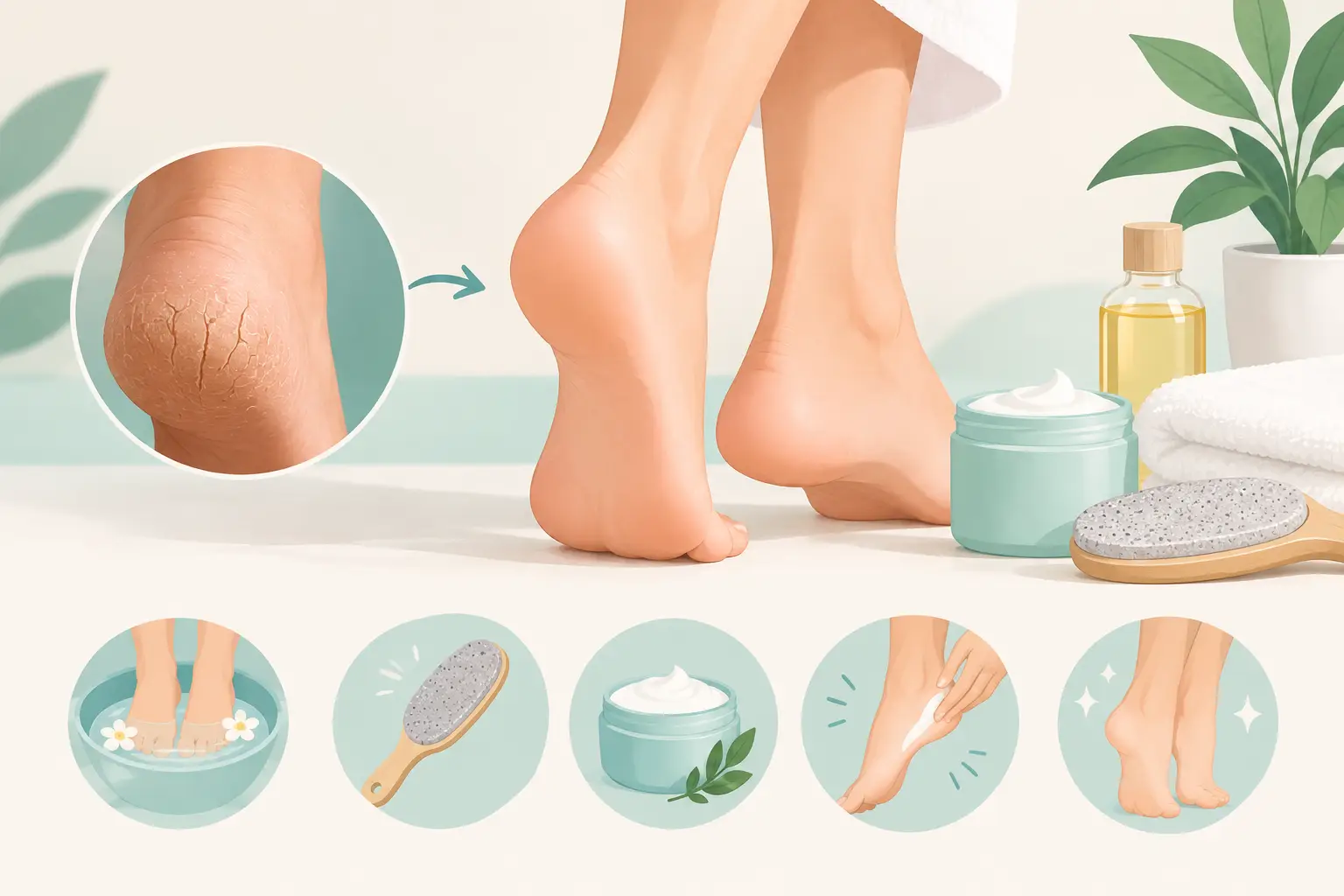
The problem may start with mild roughness when wearing sandals, then turn into painful lines that catch on socks or even bleed at times. Treating cracked heels doesn’t rely on a single quick-fix product, but on understanding the cause of dryness and sticking to a simple routine that protects the skin barrier and restores its elasticity. With regular care, most mild cases improve noticeably within a few weeks.
Why Do Heels Crack?
The skin on the heels is thicker than other areas of the foot, and it bears daily pressure from standing and walking. When this skin loses the water and natural oils that keep it supple, it becomes hard and less able to stretch, causing cracks to appear as pressure continues.
Dryness increases in hot, dry climates, with showering in very hot water, using harsh soap, walking barefoot, or wearing open-back shoes for long periods. Standing for long hours, excess weight, and not moisturizing the feet regularly can also deepen cracks.
Sometimes it isn’t just ordinary dryness. Heel cracks can be linked to fungal infections, eczema, psoriasis, or circulation and sensation issues in the feet. So if the problem keeps coming back despite care, or appears suddenly and severely, it deserves attention rather than just home exfoliation and moisturizing.
Treating Cracked Heels Starts with the Right Routine
The goal isn’t to remove all the skin in one session, since harsh scrubbing can irritate the skin and make it even thicker afterward. It’s best to combine gentle softening, moderate exfoliation, and then deep moisturizing that locks water into the skin.
1. Gently Clean Your Feet and Dry Them Thoroughly
Wash your feet with lukewarm, not hot, water, and choose a gentle cleanser that doesn’t leave a tight, dry feeling. There’s no need to soak your feet for long periods daily, as constant exposure to water can increase moisture loss after drying.
After washing, dry your feet carefully, especially between the toes. This step is simple but important, as trapped moisture in that area can encourage fungal growth, which is a different issue requiring different care than dryness-related heel cracks.
2. Gently Exfoliate Dead Skin
Once or twice a week is usually enough. After showering or a short soak of no more than ten minutes, use a soft foot file or clean pumice stone with light strokes, only on the hardened skin. Stop if you feel pain or redness, and don’t try to achieve completely smooth skin in the first session.
Avoid blades and sharp scraping tools, even if the skin looks thick. Small cuts can lead to infection, which is especially dangerous for people with diabetes or reduced sensation or circulation. Deep exfoliation isn’t recommended either when there are bleeding or open cracks.
3. Moisturize Right After Drying
The best time to apply foot cream is within minutes of drying, while the skin still holds some moisture. Choose a rich formula containing humectants like glycerin or urea at an appropriate concentration, along with emollients such as shea butter and plant oils. These ingredients don’t just give a temporarily soft feel—they help dry skin gradually regain its elasticity.
You can support your routine with pure natural butter or an oil suited to dry skin, but oils alone often aren’t enough for severely cracked heels, as they don’t add water to the skin. Use them over or after a moisturizing cream to help reduce moisture evaporation. At Allwaa Alakhdar, choosing authentic natural care fits well with this kind of routine, as long as the products suit your skin and are as free as possible from irritating fragrances.
4. Wear Cotton Socks at Night
Apply a suitable layer of rich cream before bed, then put on clean cotton socks. This helps keep the moisturizer in place and reduces friction between your heels and the bedsheets. There’s no need to overdo the amount of product—a balanced layer is more comfortable and reduces slipping.
Keep up this routine daily for the first two weeks, then reduce it to a few times a week once the skin improves. Consistency matters more here than switching between many products or expecting instant results from a single use.
Choose Shoes That Won’t Worsen the Problem
Open-back shoes may feel comfortable in the heat, but they let the heel spread outward while walking, which widens existing cracks. When treating cracked heels, it’s better to wear closed shoes or supportive sandals that stabilize the foot and protect the heel area, along with suitable cotton socks during the day.
Pay attention to sizing too. Tight shoes press on the skin, while overly loose ones increase friction. If you stand for long hours, a cushioned or arch-supporting insole can ease the repeated pressure on your heels. These details don’t replace moisturizing, but they help prevent the problem from coming back once it improves.
When Do You Need Stronger Ingredients?
If the heel is rough and thick without cuts, a cream containing urea or gentle exfoliating acids designed for feet may help. These ingredients soften the built-up outer layer of skin, but they need to be used carefully according to the product’s instructions. Don’t use them on inflamed skin, deep cracks, or right after vigorous scrubbing on the same day.
Sensitive skin may respond better to intensive moisturizing first, then gradually introducing exfoliation. If you feel ongoing burning, redness, or itching after trying a new product, stop using it and go back to a simple moisturizer. Natural doesn’t necessarily mean suitable for everyone—even oils and fragrant extracts can irritate certain skin types.
Mistakes That Delay Heel Improvement
The most common mistake is only applying moisturizer when you notice roughness, then stopping as soon as the texture improves. Heels need ongoing protection, especially in summer or with frequent walking. Also, harsh exfoliation can backfire, as the body may build an even thicker layer to protect the area.
Another mistake is relying on petroleum jelly or oil without moisturizing beforehand. A sealing agent can lock in moisture, but it can’t replace it if the skin is completely dry. Apply a moisturizing cream first, then add a light sealing layer at night if needed.
Don’t neglect drinking water and nourishing your body, but don’t expect water alone to heal deep cracks. Skin health is affected by internal hydration, but the heels are exposed to external factors and direct pressure that require regular topical care.
When Should You See a Doctor?
See a doctor or foot care specialist if the cracks are deep, bleeding, painful when walking, or surrounded by redness, warmth, swelling, or discharge. Also, don’t try to treat cracks yourself through exfoliation if you have diabetes, poor blood flow, or nerve damage, as small wounds can worsen without you noticing early on.
If the cracking comes with itching and peeling between the toes or an unusual smell, it could be a fungal infection that needs proper treatment. Addressing the real cause saves time and protects your feet from the problem recurring.
Start tonight with one easy step: wash your feet with lukewarm water, dry them thoroughly, apply a rich moisturizer, and put on cotton socks. This small, repeated care is what gives your heels the soft, well-groomed look they deserve.