


Conditioner for curly hair that moisturizes curls without weighing them down

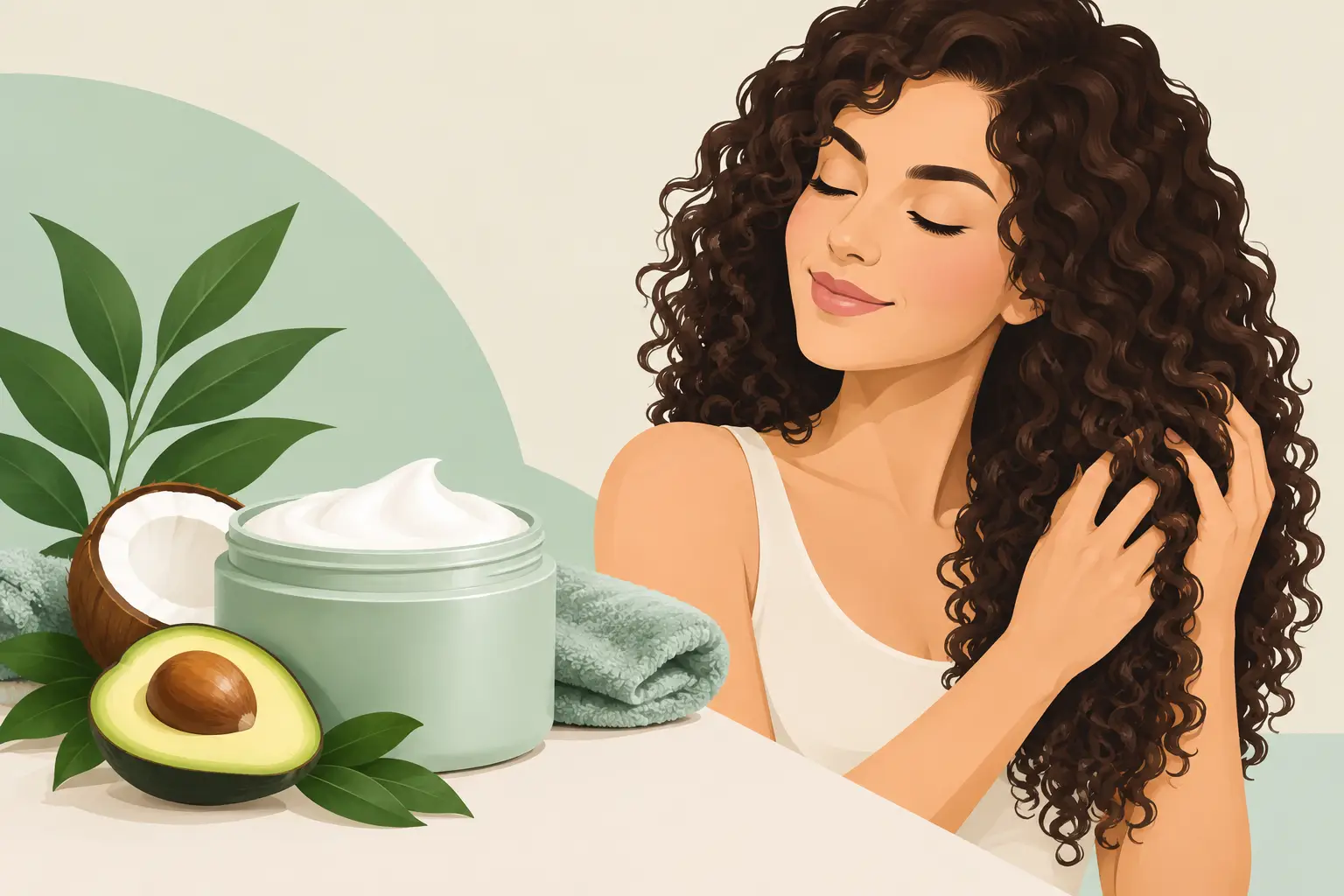
Curly hair doesn’t need more harsh washing as much as it needs balanced moisture that stays within the strand. Beautiful curls can look dull or tangled once they lose their natural oils, and that’s where a conditioner for curly hair comes in, giving curls softness and making them easier to style without turning them greasy or heavy.
Choosing the right conditioner isn’t a secondary step after shampoo. For curly and wavy hair, it’s an essential part of the routine that shapes how your curls look, how shiny they are, and how easy they are to manage day after day. The best results don’t come from a single product alone, but from understanding what your hair needs and using the right conditioner the right way.
Why does curly hair need a special conditioner?
The structure of curly hair makes it harder for the natural oils produced by the scalp to travel down to the ends compared to straight hair. That’s why the ends tend to dry out while the roots may stay in good condition. When a strand is dry, its outer layer lifts, causing friction between strands, which leads to frizz, more tangling, and curls that lose their defined shape.
A good conditioner forms a light layer of moisture around each strand, reducing friction and making it easier to detangle in the shower. It also leaves curls feeling softer and makes them easier to comb through with your fingers or a wide-tooth comb. But the word “moisturizing” alone isn’t enough, since some overly rich formulas may not suit fine hair or scalps prone to excess oil.
How to choose a conditioner for curly hair
Start from your hair’s actual condition, not just the shape of your curls. If your strands are coarse, feel dry to the touch, or tangle quickly, look for a conditioner rich in soothing, moisturizing ingredients like aloe vera, vegetable glycerin, shea butter, and plant oils suited for cosmetic use. These ingredients help improve hair texture and give it the flexibility it needs when styling.
If your hair is fine or thin and your curls lose their volume quickly, choose a lighter formula based on water-based hydration and plant extracts instead of heavy butters and oils. Fine hair needs slip and detangling, but it doesn’t need a heavy layer left behind after rinsing.
Also pay attention to your hair’s length and condition. Colored hair or hair regularly exposed to heat needs gentler care and more consistent hydration, while healthy hair may do fine with a medium-richness conditioner after most washes. There’s no single formula that’s perfect for everyone, and the right choice shows in how your hair feels once it’s dry, not just while you’re in the shower.
Ingredients that give curls better care
Plant oils like coconut oil, argan oil, or jojoba oil may help soften strands and reduce dryness, but their benefit depends on the amount used and your hair type. Some low-porosity hair doesn’t take well to heavy oils and may end up looking weighed down or dull if used too often.
Shea butter usually suits thick, dry curls well, since it gives a more noticeable sense of nourishment. Aloe vera, herbal extracts, and vegetable glycerin, on the other hand, are favorite options for those who want lighter hydration and natural shine without an overly oily feel.
It’s best to read the full ingredient list, especially if your scalp is sensitive or prone to itching. Strong fragrances may not suit everyone, and the same goes for products that leave noticeable buildup with repeated use. A good natural product doesn’t mean ignoring your individual needs — it means choosing known ingredients, a trusted source, and mindful use.
How to use conditioner for neatly defined curls
Apply conditioner after cleansing your hair with a suitable shampoo, on damp hair that’s dripping water but not soaking wet. Start from the middle of the strands down to the ends, since these areas need moisture the most, then lightly distribute the remaining amount near the roots if they’re dry.
Leave the conditioner on for a short time according to the product’s instructions, then detangle with your fingers or a wide-tooth comb. Always start from the ends and gradually work your way up. This simple motion helps preserve the shape of your curls and reduces the chances of breakage, while combing straight from the roots can turn a small tangle into an annoying knot.
When rinsing, don’t overdo it and strip away all the softness from your hair, but don’t leave a heavy layer behind either if the conditioner is meant to be rinsed out. Lukewarm water is better than very hot water, since excess heat can make hair feel drier. Afterward, gently squeeze the strands dry with a soft cotton towel or a cotton T-shirt instead of rubbing vigorously.
How often should conditioner be used?
In most cases, conditioner can be used after every shampoo wash. But how often you wash your hair itself varies depending on lifestyle, scalp type, and hair thickness. Very dry hair may benefit from washing less frequently along with a weekly moisturizing mask, while hair that’s regularly exposed to sweat or dust may need more frequent cleansing with a lightweight conditioner.
If you notice your hair looking flat or greasy after drying, you might be using too much product or the formula may be heavier than what you need. And if your hair stays coarse and hard to style, you might need a bit more product, a richer formula, or to improve your rinsing and drying technique.
Rinse-out conditioner or leave-in conditioner?
Rinse-out conditioner is the foundation of any hair care routine, since it gives hair instant softness and makes detangling easier after washing. Leave-in conditioner, on the other hand, is used in a small amount after showering and is especially helpful for ends that dry out quickly or curls that lose their shape between washes.
You can combine both types, but in moderation. Use rinse-out conditioner first, then apply a limited amount of leave-in conditioner to damp strands, focusing on the ends. If your hair is fine, it’s enough to use it on dry days or as needed instead of applying it after every wash.
Mistakes that make conditioner less effective
The first mistake is applying conditioner to very tangled hair without sectioning or distributing it properly, so some areas get enough product while others stay dry. The second mistake is using too much, thinking it gives double the hydration, when in fact it can cause buildup and make curls look dull.
Also, don’t rely on conditioner alone if you’re constantly using high heat or ignoring split ends that need trimming. Balanced care includes a gentle shampoo, a suitable conditioner, calm drying methods, and cutting back on habits that drain your hair’s moisture. Patch-testing a new product on a small area of hair or skin is also a reassuring step when trying a new formula.
At Allwaa Alakhdar, we believe natural care starts with a mindful choice of clear ingredients and trusted quality. Look for what truly suits your hair’s nature, not just quick promises, and give your curls time to regain their flexibility. Once you find the right conditioner and use it gently and consistently, your curls will become easier to style and more vibrant every day.