


Is Raw Honey Safe for Children? The Safe Age First

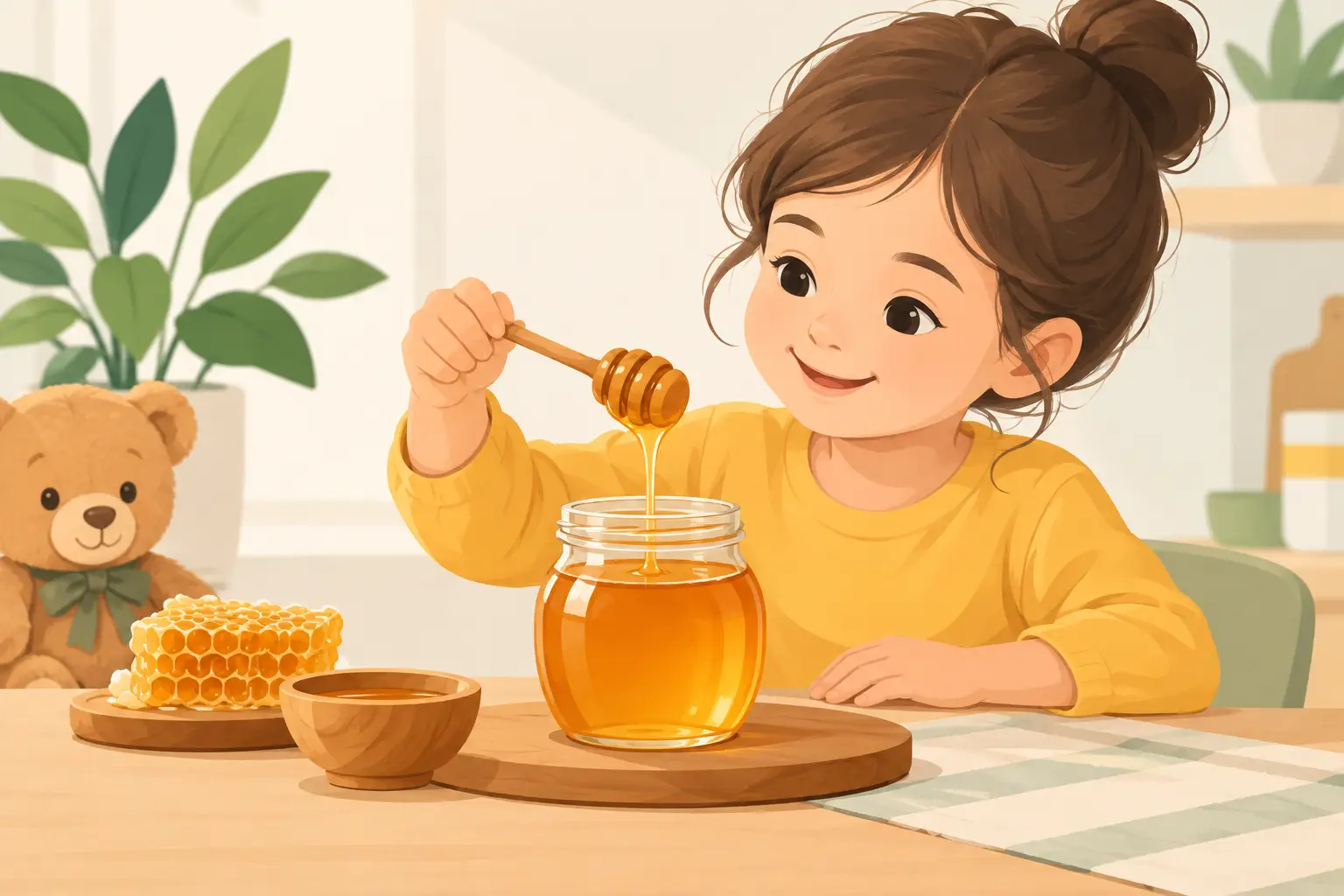
A spoonful of natural honey might seem like a simple addition to a child’s breakfast or warm drink, especially when the honey is from a known source and rich in natural flavor. However, the question of whether raw honey is suitable for children cannot be answered by considering the honey’s quality alone, but rather by the child’s age, health status, and how it’s offered. The rule that gives parents peace of mind is clear: no type of honey should be given to an infant before they complete 12 months, no matter how raw, organic, or pasteurized it is.
After the first year, most children can consume honey in moderation as part of a balanced diet. However, conscious choice remains important, because honey is a concentrated natural sugar, and raw honey differs in its properties from processed honey without changing the basic safety rule for infants.
Is Raw Honey Suitable for Children by Age?
Before 12 Months of Age: Never Offer Honey
It is not recommended to give infants under one year of age any type of honey, including raw honey, mountain honey, pasteurized honey, or honey found in homemade mixtures. The reason is the possibility of honey containing bacterial spores that may, in rare cases, lead to infant botulism. This does not mean the honey is impure or of poor quality, as these spores can naturally exist in the environment and cannot be distinguished by color, smell, or taste.
An infant’s digestive system at this age is not mature enough to handle these spores as an older child’s or adult’s system would. Therefore, do not let the quality of the source or the phrase “100% natural” be a reason for exception. Even a small amount, placing honey on a pacifier, or adding it to water and herbs, is not suitable before completing 12 months.
This also applies to homemade baked or cooked foods that contain honey as an ingredient. Home heating should not be relied upon to make honey suitable for infants, and it is safest to avoid it entirely at this stage.
After One Year of Age: Yes, but in Moderation
After a child completes their first year, most children can safely consume raw honey in limited quantities. A small amount can be mixed with unsweetened yogurt, spread thinly on bread, or added to oatmeal. A child does not need large quantities to benefit from the taste of honey, and accustoming them to a very sweet taste early on may make it harder for them to accept less sweet foods later.
It is best for honey to be part of a meal or snack, not a frequent habit between meals. After consumption, dental hygiene should be observed, especially before bedtime, as honey contains sugars that may increase the risk of tooth decay if consumed repeatedly or left on teeth for hours.
For Older Children: Quality Does Not Override Moderation
Children older than one year can enjoy raw honey as part of a varied diet that includes fruits, vegetables, proteins, and grains. However, describing honey as natural does not mean it is calorie-free or an unlimited substitute for sugar. Moderation is the best choice, especially for children who already consume sweetened juices, sweets, or breakfast cereals containing added sugars.
What is the Difference Between Raw Honey and Pasteurized Honey?
Raw honey is honey that has typically not been subjected to high heat treatment and may be minimally filtered, retaining some of its natural components such as pollen and traces of wax. Pasteurized honey, on the other hand, is exposed to heat to reduce crystallization and improve its appearance and shelf stability.
For a child over one year old, some parents may prefer raw honey due to its proximity to its natural form, distinct taste, and diverse plant sources. However, there is no difference that makes raw honey safe for infants or makes pasteurized honey an exception to the prohibition rule before the first year. Age is the decisive factor, not the type of processing.
It should also be understood that the word “raw” alone is not sufficient proof of purity. Choosing honey from a clear source, stored correctly, and offered by a trusted store, is what helps a family make a confident purchasing decision. At Alwaa Alakhdar, the authenticity of the source and natural honey receive special care, but offering it to children always remains linked to the correct age guidelines.
How to Introduce Honey to Your Child After the First Year?
Start with a small amount, especially if the child is tasting it for the first time. Half a teaspoon can be offered with food, then monitor their acceptance. Honey is not an essential food in a child’s diet, so there is no need to force it or use it to sweeten every meal.
Avoid adding it to milk bottles or making it a permanent way to persuade the child to drink or sleep. This practice may link the child to sweet tastes and prolong sugar’s presence on teeth. It is also preferable not to offer it directly before bedtime unless teeth are thoroughly cleaned afterward.
When using honey to sweeten a recipe, reduce the usual amount. A child gradually learns their food preferences, and allowing natural flavors of fruits, milk, and oatmeal helps them accept a balanced diet without relying on sweetness.
Does Honey Help Soothe Children’s Coughs?
For children aged one year and older, a small amount of honey may help soothe throat irritation and mild coughs, especially in the evening. It can be given alone or dissolved in a warm (not hot) drink. However, it is not a cure for infection and does not replace a doctor’s evaluation when there are concerning symptoms.
Honey should never be given to a child under 12 months to treat a cough. Likewise, if the cough is accompanied by difficulty breathing, wheezing, persistent fever, severe lethargy, or reduced fluid intake, the priority is to seek medical advice instead of relying on home remedies.
When Should You Be More Cautious?
Honey allergies may appear uncommonly and are often related to pollen or other components. When trying a new type, observe the child during the following hours. Discontinuing it and seeking medical help is necessary if signs such as a widespread rash, swelling of the lips or face, recurrent vomiting, or difficulty breathing appear.
As for infants who accidentally consumed honey before one year of age, there is no need to panic, but contact a pediatrician for appropriate guidance and monitor for any unusual symptoms. Signs requiring urgent medical attention include clear constipation with poor feeding, weak crying, unusual floppiness, and difficulty breathing. These cases are rare, but early intervention is important.
Choosing Reliable Honey for Your Family
After the child passes their first year, look for natural honey with a clear origin, understandable product data, and secure packaging. Color, taste, and density vary depending on the pasture and season, and light or dark color alone is not an indicator of quality. Crystallization is also a natural phenomenon that may occur in some types of honey and does not necessarily mean there is a problem with the product.
Store honey in a dry place at moderate temperature with the container tightly closed, and use a clean, dry spoon to avoid introducing moisture or food residues. If the child is taking regular medication or has a special health condition, consulting a pediatrician before introducing new foods remains a reassuring option.
Raw honey can be a delicious and natural addition to a child’s table after their first year, but the best decision combines the authenticity of honey with parental awareness: wait until the first year, choose a reliable source, and offer it in moderation so that the sweet taste remains a simple and safe part of your family’s habits.