How to Choose Mountain Honey with Confidence

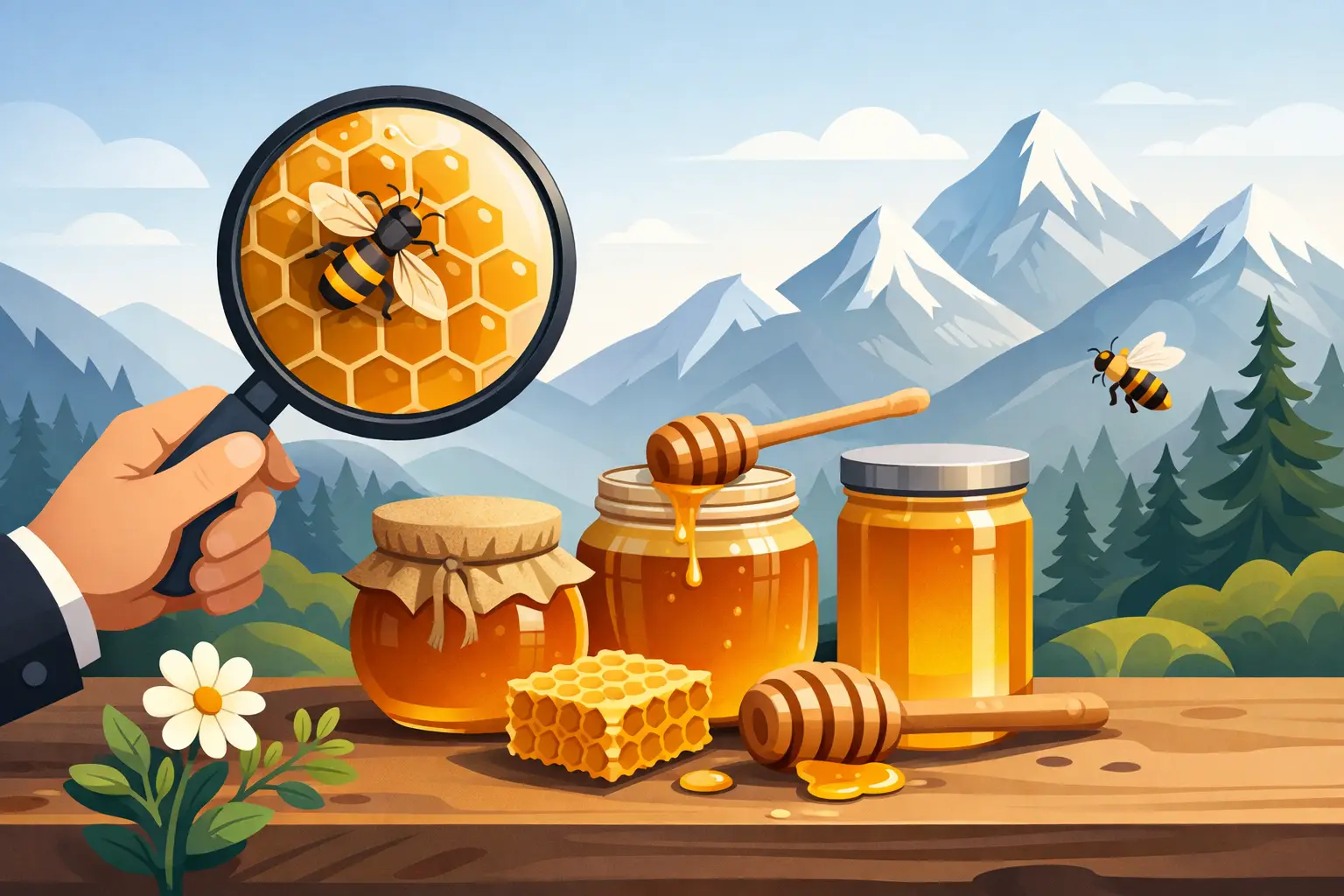
When you see more than one type of honey in front of you—with different prices and similar descriptions—the real question isn’t which one is more expensive, but how to choose mountain honey in a way that gives you real quality, not just an attractive name on the jar. Mountain honey appeals to many people looking for purity and benefits, but its true value isn’t judged by appearance alone—it’s in a set of details that start with the source and don’t end with the taste.
Mountain honey isn’t just a label. It usually means honey collected from mountainous environments rich in wild plants and natural pastures, which shows in its aroma, composition, and flavor. But here’s an important point—not every honey labeled “mountain” is necessarily at the same level of authenticity or purity. That’s why choosing wisely depends on reading the product details well and understanding the signs that distinguish trusted natural honey from honey that relies more on marketing than on quality.
Start by Choosing Mountain Honey Based on Its Source
The first thing worth your attention is the source. Natural honey is directly tied to its environment, so the clearer and more specific the source is, the more confidence you can have in its quality. Ask about the country of origin, the region if possible, and whether it comes from known apiaries. Honey presented with a vague, general source leaves more room for doubt, while honey linked to a clear environment gives you a better sign of authenticity.
It’s also important to know whether the seller specifies the honey type itself or just uses a general phrase like “natural honey” or “premium honey.” A detailed description is a good sign, because a trusted product doesn’t rely on broad claims—it provides information that helps you make an informed decision. That’s why many buyers prefer dealing with an organized store that cares about details and presents the product clearly, especially when the focus is on 100% natural products with a known source.
Understand Color and Texture Without Rushing to Judge
A common mistake is thinking dark honey is always better, or that light honey is lower quality. The truth is that honey color varies depending on the flowers, pastures, environment, and harvest time. You might find mountain honey in a light amber shade and another much darker—both can be excellent. Color alone isn’t a decisive proof, but it becomes useful when it matches the declared honey type.
The same applies to texture. Some people link quality only to very thick honey, but thickness is also affected by temperature and the nature of the stored nectar. Natural mountain honey is usually cohesive and balanced—not overly watery and not unnaturally gel-like. If it pours very quickly, it may make you question the moisture level or storage method. And if the texture is artificially stiff, that doesn’t automatically mean it’s excellent.
Aroma and Taste Reveal a Lot
Natural honey has a clear aroma, but it shouldn’t be sharp or artificial. Mountain honey often carries a botanical, floral, or herbal character that varies by type. If the smell is very faint or closer to burnt sugar, it’s fair to be more cautious. Aroma isn’t a lab test, but it gives an important first impression.
As for taste, it should be rich and layered—not just a direct sweetness that disappears quickly. Good honey leaves a clear finish in the mouth and may carry an herbal or floral note, or even a slight bitterness depending on its source—and that’s normal. The goal isn’t for the taste to be identical every time, but for it to feel natural and balanced. A very flat flavor may point to an ordinary product, even if it looks appealing.
Is Honey Crystallization a Good or Bad Sign?
Many customers worry when they see honey crystallize or form granules over time. In fact, crystallization in natural honey is very common, and in many cases it can be a reassuring sign. It comes down to its natural sugar composition, the type of nectar, and storage temperature. So it’s not correct to automatically treat crystallization as proof of adulteration.
But it depends on the full picture. Natural crystallization is usually gradual and fairly even, while separation or unclear layers may be worth asking about. Most importantly, natural honey shouldn’t be judged by one detail alone. Color, texture, aroma, source, and how it’s presented all work together.
How to Choose Mountain Honey Based on How You’ll Use It
Not every mountain honey suits every purpose to the same degree. If you’re buying it for everyday use with breakfast or warm drinks, you may prefer a balanced flavor and an easy-to-use texture. But if you’re looking for a stronger character and a more concentrated taste, you might lean toward darker or denser types.
That’s where asking about the product itself helps, instead of relying on the name alone. Some customers want honey for daily tasting, while others care more about a special honey for gifting or seasonal use. There isn’t one option that fits everyone. The best choice is what matches your expectations and real use—not just what looks luxurious on the jar.
Pay Attention to the Packaging and Storage
A good product usually shows respect for itself through its packaging. A clean, tightly sealed jar with a clear label gives an important impression of seriousness and transparency. Details like weight, country of origin, packing date, and store or supplier information all help you buy with more confidence.
Storage also affects the honey experience. Even excellent honey can lose some of its quality if exposed to high heat or stored poorly. That’s why it’s best to buy honey from a seller that cares about fast shipping and proper packaging—especially if you’re ordering online. Quality isn’t only about what’s inside the jar, but also how the product reaches you.
Don’t Let Price Alone Decide
Price matters, but it’s not the only judge. Natural mountain honey is often not the cheapest on the market, because its source, quality, and production method raise its value. On the other hand, a very high price doesn’t always mean it’s the best. Sometimes you’re paying for packaging or a brand name more than for a real difference in quality.
It’s better to look at value. Does the product provide a clear source? Is the description precise? Is the seller trustworthy? Are customer experiences reassuring? These questions are more useful than comparing numbers alone. A smart buyer isn’t only looking for the cheapest option, but for a product that’s worth what they pay.
Signs That Reassure You When Buying Online
Buying honey online has become a convenient option for many customers inside the Gulf and beyond, but it needs extra attention. Look for a store that provides clear information, realistic photos, and a straightforward description without exaggeration. Transparency is essential here. When natural products are the focus, the details should be visible—not hidden.
Customer reviews help too, but it’s best to see them as part of the picture, not all of it. If you find a store that balances quality presentation, clear policies, secure payment, and customer service, these are strong signs of reliability. That’s why many shoppers prefer dealing with specialists in Omani natural products, like Alwaa Alakhdar, because they base the buying decision on authenticity and clarity more than on general promises.
Common Mistakes When Buying Mountain Honey
Some buyers choose honey based on just one popular “test,” like watching how it drips from a spoon or dissolving it in water. These methods are common, but they aren’t enough on their own to judge quality. It’s also a mistake to think any honey that doesn’t crystallize is adulterated, or that every dark honey is excellent. Reality is more nuanced than these quick judgments.
Another mistake is buying large jars on the first try. If you’re trying a new type or a new store, start with a suitable size. This gives you a chance to evaluate the flavor, texture, and how well it suits you before buying again. Smart decisions with natural products start gradually, not impulsively.
Good mountain honey makes an impression from the first use, but choosing it correctly starts before you open the jar. The more you give yourself a few extra minutes to review the source, description, and presentation, the closer you’ll be to buying natural honey that deserves your trust and earns its place in your home.