


Guide to Buying Authentic Frankincense Before Ordering

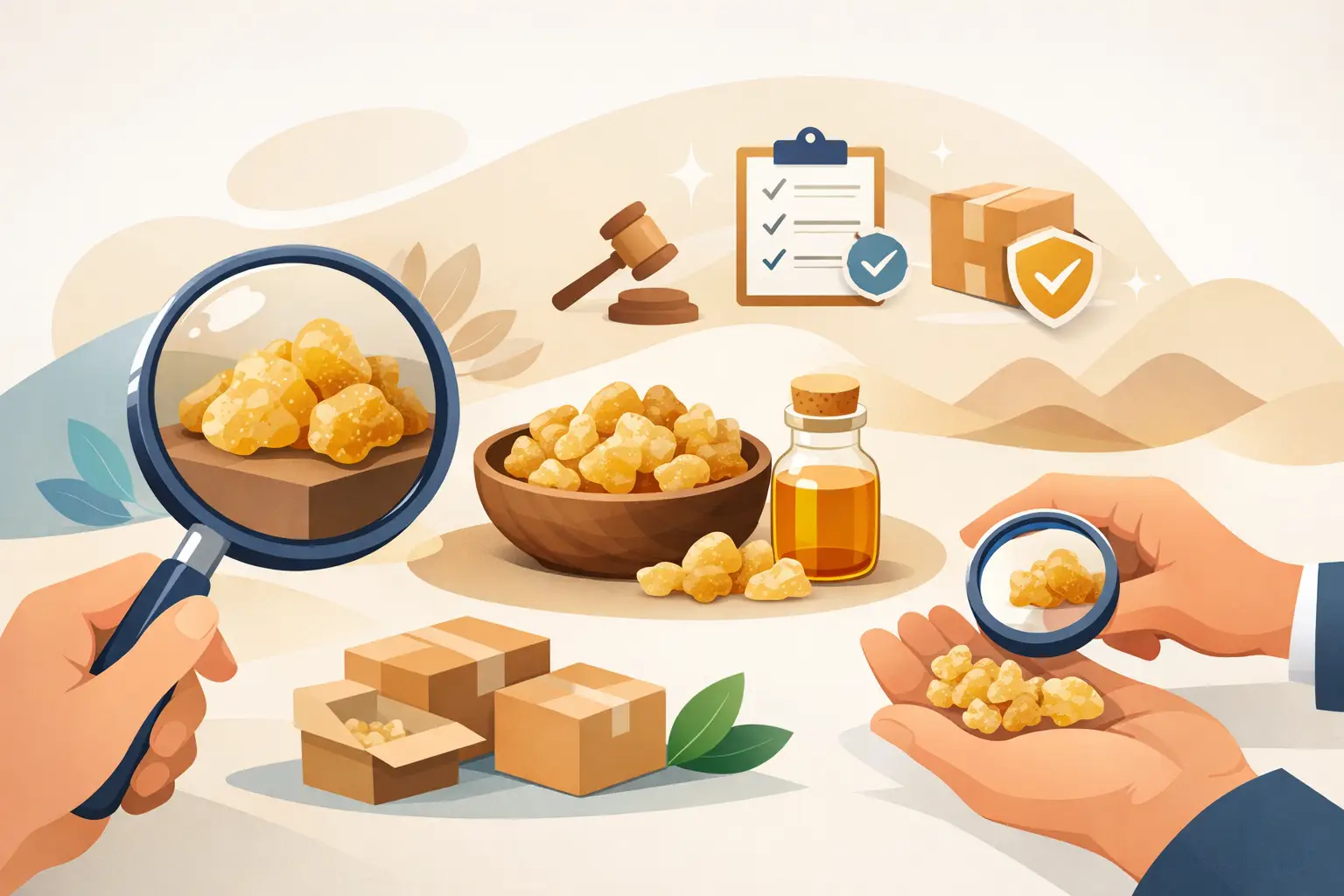
Sometimes, just a few seconds of looking at a frankincense resin piece is enough to tell if you have an authentic product or just ordinary goods marketed under a big name. For this reason, the guide to buying authentic frankincense doesn’t start with the price, but with a correct understanding of what you’re actually buying: the origin, grade, shape, and scent, then the method of use that suits you.
Frankincense is not a single, identical product every time. There’s a clear difference between frankincense intended for chewing, another for burning (incense), and a third that customers buy to benefit from soaking it or incorporating it into a daily natural routine. The more known the source and clearer the sorting, the higher the chance of getting true quality.
The Guide to Buying Authentic Frankincense Starts with the Origin
The first question you should ask before buying is: Where did this frankincense come from? In the Arab market generally, Omani frankincense—especially that from Dhofar—remains an important reference when talking about authenticity and quality. Not just because the name alone is enough, but because the environment, climate, and harvesting method truly affect the scent, purity, and general characteristics.
When the frankincense source is unspecified, or it’s only labeled “natural frankincense” without details, this is a sign worth pausing for. A clear origin eliminates much hesitation. A reliable product usually mentions the type of frankincense, its region, or at least clarifies if it’s originally Omani. Transparency here isn’t a marketing detail, but an essential part of the purchasing decision.
How to Distinguish Authentic Frankincense by Appearance and Scent?
The external appearance gives you important clues, but it’s not enough on its own. Authentic frankincense pieces are often not perfectly identical, showing natural variations in size and color. This variation is not a flaw; in many cases, it’s a good sign because it indicates that the product hasn’t been artificially manufactured or mixed in a way that makes it lose its natural character.
In terms of color, grades vary depending on the type and sorting. You might find frankincense that is somewhat transparent, white with a yellowish tint, or relatively darker shades. Color alone doesn’t determine quality, as some customers believe that anything white is the best, which isn’t always accurate. The most important thing is that the color is natural and consistent with the advertised type of frankincense.
As for the scent, it’s one of the strongest indicators. Authentic frankincense carries a clear, clean natural aroma that doesn’t seem chemically sharp or flat as if it lacks soul. When you rub or slightly break a piece, a distinctive aromatic resinous scent should emerge. If the scent is very weak, strange, or closer to artificial perfumes, it’s best to reconsider the purchase.
Purity Grade is More Important Than the Brand Name
Some products are sold under attractive names, but true quality is revealed in the level of purity. Are the pieces clean? Do they contain many impurities like shell fragments or excessive dust? Is the sorting clear, or is the package full of very small fragments with only a limited number of good pieces?
Clean and carefully sorted frankincense provides a better experience whether you use it for chewing, soaking, or burning. In contrast, a low price might be tempting, but it sometimes means the product is less sorted or mixed with very varying grades. Here, an important factor emerges—not every economical purchase is a good deal, especially if you’re looking for consistent results and reliable quality.
What’s the Difference Between Frankincense Grades and Why Does It Matter to You?
In the market, you’ll find multiple grades and types, some known by their specific names like Hojari frankincense, and others presented by sorting grade, size, or color. What matters to the consumer isn’t memorizing all classifications as much as knowing the purpose of the purchase.
If you want frankincense for chewing, look for clean pieces that are relatively comfortable in texture, with an acceptable taste and a clear scent. If your goal is burning, you might be more interested in the strength and persistence of the scent when used. If you intend to soak it, purity becomes more important than external appearance alone.
Therefore, there isn’t one grade suitable for everyone. What’s best for someone interested in daily care might not be the same choice for someone focusing on burning or traditional use. Smart buying doesn’t always mean buying the most expensive, but buying the right grade for your actual need.
Guide to Buying Authentic Frankincense Based on Usage Method
Before adding the product to your cart, define your primary use. This simple step prevents a lot of confusion. If you’re buying for the first time, it’s better to start with a moderate quantity from a reliable source instead of buying a large quantity just because the price is discounted.
For daily use, customers usually need clean frankincense that is easy to store and has a consistent scent. For occasions or burning, a stronger presence when heated might be preferred. And for those seeking a natural experience linked to Omani heritage, details of origin and sorting are more important than packaging alone.
In other words, don’t just ask: What’s the best frankincense? Ask: What’s the best frankincense for me? This small difference in thinking saves you a lot of trial and error.
Pay Attention to Packaging and Presentation
Good packaging doesn’t create authenticity, but it preserves it. Frankincense is a natural product, and if stored poorly or displayed in unsuitable packaging, it might be affected by humidity or lose some of its scent over time. Therefore, it’s best to choose a product stored in clean, relatively airtight packaging, with clear information about the contents.
Likewise, the way a product is presented in an online store reveals the level of seriousness. Clear photos, usage descriptions, clarification of the country of origin, and mention of the actual weight all build trust. However, exaggerated descriptions with a lack of essential details warrant caution. Trust in natural products begins with clear information, not just grand promises.
Does a High Price Mean Better Frankincense?
Not always, but in many cases, it reflects a real difference in origin, sorting, or rarity. High-quality authentic Omani frankincense is usually not the cheapest on the market, especially if it’s carefully sorted and offered by a party committed to quality and service. However, this doesn’t mean that every high-priced product is worth its value.
It’s best to balance four factors: origin, cleanliness, suitability for use, and seller reliability. If these elements come together, the price becomes more logical. But if the price is high without any clear details about the source or grade, this is not an advantage but a risk.
How to Choose a Reliable Store When Buying Frankincense?
For natural products, the store itself is part of the quality. Choose a vendor that clearly explains its product, provides real photos, and directly states shipping, payment, and return policies. These details are especially important for customers within and outside the Gulf, because the shopping experience doesn’t end with just selecting the product.
A reliable store makes your decision easier instead of confusing you. You’ll notice this in the organized description, customer service availability, and trust signals like reviews or clarification of shipping speed and secure payment. When this combines with a clear origin and 100% natural quality, buying becomes more comfortable and less hesitant. This is why many customers prefer dealing with specialized stores like Allwaa Alakhdar when the goal is to obtain authentic Omani frankincense with a known source and organized service.
Common Mistakes When Buying Authentic Frankincense
The most common mistake is relying solely on color. Immediately after that comes judging quality based on piece size alone, or buying a large quantity without initial testing. Also, some customers forget that natural frankincense naturally varies slightly from batch to batch, which is normal as long as the origin is consistent and the purity is clear.
Another mistake is ignoring the purpose of use. Someone might buy an excellent type that doesn’t suit their method of use, then think the problem is with the frankincense itself. The correct decision starts with your need, then the source, then the level of trust in the seller.
When you treat frankincense as a natural product with real grades and differences, choosing becomes much easier. Don’t just look for an attractive name; look for frankincense with a clear origin, that is clean, well-preserved, and offered by a store that knows what it sells. This type of purchase not only gives you a better product but also greater peace of mind every time you reorder.