


Omani Frankincense vs. Imported: Which One Is Worth It?

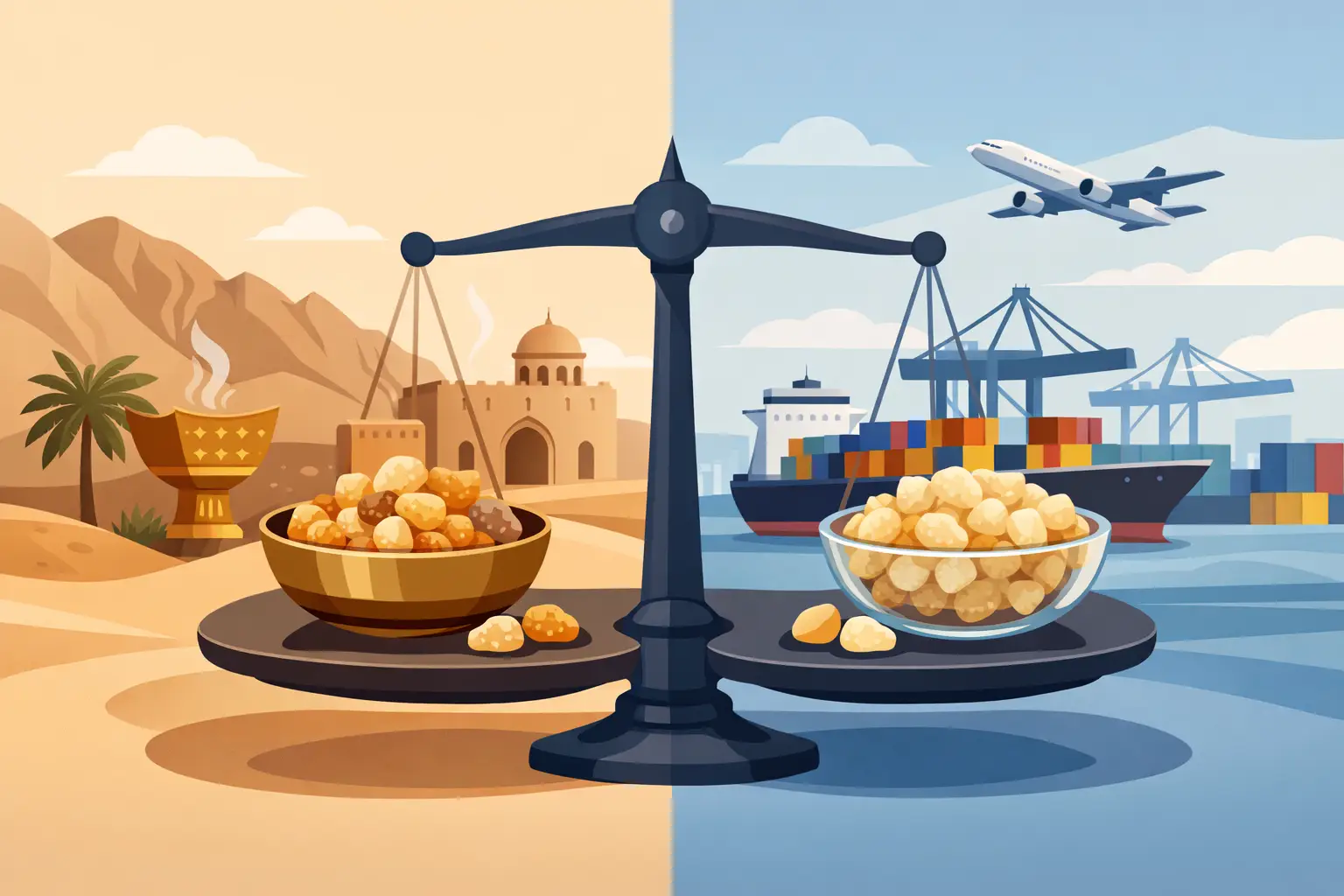
When you stand before more than one type in the market and ask yourself: Omani frankincense or imported, you’re not just comparing two names, but an entire experience that starts from the source and ends with the result you get in scent, use, or value for money. Many buyers think the difference is minor, but the reality is that the difference shows up quickly in purity, consistency, and even in the appearance of the resin itself.
Frankincense is not one identical product everywhere. There’s a clear difference between frankincense from a known source, properly preserved, and carefully sorted, and frankincense that reaches the market with varying degrees of quality, mixing, or improper storage. That’s why the right question isn’t just which is cheaper, but which is more reliable and better for your daily use.
Omani Frankincense vs. Imported: Where Does the Difference Begin?
The difference begins with the tree and the environment. Omani frankincense, especially from Dhofar, is linked to well-known natural conditions that helped form a resin with a strong reputation for quality, scent, and purity. This reputation didn’t come out of nowhere, but from a long history of use and trade, and from clear preference by those who know real frankincense.
As for imported frankincense, it’s not necessarily bad in all cases. Here’s an important point. The word “imported” is very broad and may include different grades of quality, from acceptable to good, and sometimes to very poor. So it’s not enough to say a product is imported or natural to understand its level. What actually makes the difference is the origin, sorting, storage, and honest presentation.
In practical comparison, Omani frankincense is often known for beautiful scent, clear resin, and high confidence in the source when purchased from a specialized seller. Meanwhile, some imported frankincense may suffer from significant variation between batches, making the experience less stable for consumers who want reliable quality every time.
How Do You Identify Quality with Your Eyes Before Buying?
The first thing that catches attention is the shape of the pieces. Good frankincense is usually clear in appearance, solid, and closer to visual cleanliness, without many impurities, excessive fine breaks, or extra dust in the package. Color also has significance, but you shouldn’t rely on it alone, because color may vary depending on type, sorting grade, and harvest season.
Scent is a very important indicator. When you open the package, you should feel a clear natural scent, not suffocating, and not strange or sharp in a way that suggests poor storage. Authentic Omani frankincense often leaves a clean and distinctive impression from the first time, while weaker types may have a faint or unstable scent.
There’s also the texture of the resin. A good piece shouldn’t be excessively soft or crumbly in a suspicious way. And if the package contains very extreme variation in sizes, or a large proportion of crumbs, this may indicate lower-quality sorting or improper handling.
Scent and Consistency: The Difference Everyone Notices
In aromatic and natural products, scent isn’t a small detail. It’s an essential part of the value. Many customers prefer Omani frankincense because it provides a more balanced and pure experience, whether for burning or for other traditional uses. The scent here isn’t just a quick trace, but carries a clearer and more refined character.
Imported types may give an acceptable result sometimes, especially if from a good source, but the variation in them is greater. You might buy an excellent batch once, then find a lower-quality batch the next time. This fluctuation is annoying for consumers who want a consistent level, especially if they use frankincense regularly at home, present it as part of hospitality, or rely on it in their daily routine.
Consistency also enters the comparison. Some types retain their scent and value for a longer period with proper storage, while other types lose part of their quality quickly. And here the effect of origin and quality of handling the product from collection until it reaches the consumer shows.
Is Price Alone a Fair Standard?
Price tempts quick comparison, but it’s not the only standard. Yes, you may find imported frankincense at a lower price, and this may be suitable for those looking for an economical option for limited use. But the more important question is: what do you get for this price?
If you buy a cheaper quantity but with average or poor quality, you may consume a larger amount to get the same effect, or feel dissatisfied with the scent or purity. Then the savings won’t be real. But if you pay a little more for an authentic product with a known source, you’ll likely feel you bought quality you can trust, not just a package at a lower price.
This doesn’t mean all imported is worthless, nor that all Omani frankincense offered in the market is automatically excellent. Safety here is in buying from a clear store that explains the source, presents the product honestly, and gives the customer a reassuring picture of quality. That’s why many customers look for a specialized seller like ALLWAA ALAKHDAR when they want a 100% natural product with a known source and reliable shopping experience.
When Is Imported Frankincense an Acceptable Option?
Fairness is important in this comparison. Sometimes imported frankincense is suitable if the purpose is general use, or if the budget is limited, or if the source is reliable and actually offers a good grade. Not all imported is low quality, but the problem is it needs greater scrutiny before purchase.
If you’re a beginner in using frankincense, you may not notice some subtle differences from the first time. But those accustomed to authentic Omani frankincense usually discover the difference quickly in scent, clarity, and overall impression. That’s why experienced users tend to prefer the known original even if at a relatively higher price.
In other words, the choice depends on your expectations. If you’re looking for the best experience and highest confidence in the source, the scale clearly tips toward Omani frankincense. And if your goal is an initial economical trial with readiness for quality variation, you may look at some carefully selected imported options.
Omani Frankincense vs. Imported for Daily Use
Daily use reveals quality more than occasional use. When you use frankincense regularly, you start noticing details like scent consistency, product cleanliness, ease of storage, and how satisfied you are with each package you buy. Here the authentic product usually advances because it gives you stability in experience, and this is very important for those who don’t want surprises with each new order.
In Gulf and Arab homes generally, frankincense isn’t a secondary product. It’s part of care, hospitality, identity, and natural routine. So it makes sense for the consumer to choose a product that reflects this value, not just a quick substitute. Quality here isn’t luxury, but also peace of mind.
On the other hand, if use is intermittent and simple, some buyers may see that the imported type serves the purpose. But even in this case, clarity of source remains a decisive factor. Natural products need trust, and trust isn’t built on price alone.
Signs That Help You Make the Right Decision
When you buy frankincense, look at the product description with a practical eye. Is the source clearly mentioned? Is there transparency in the type and grade of frankincense? Are product photos realistic? Is the store known for its organization, policies, and customer service? These questions are more important than any general promotional phrase.
It’s also useful to notice the packaging method. A product treated with care from the beginning to shipping usually arrives in better quality. Good storage preserves scent and texture, and reduces damage and crumbs. Also, having real customer reviews gives a reassuring indicator, especially if experiences repeat with the same positive impression about authenticity and quality.
And don’t forget that real natural frankincense doesn’t need exaggeration in description. A good product proves itself from the first use, whether in scent or in the overall feeling of purity.
Which Is Actually Better?
If the question is direct, the direct answer is that Omani frankincense usually excels when the priority is authenticity, purity, quality consistency, and long-term purchase value. This excellence doesn’t depend only on reputation, but on repeated experience known by those who use frankincense regularly and look for a reliable level.
As for imported frankincense, it may be an acceptable solution in some cases, but it needs greater scrutiny, more realistic expectations, and acceptance of the idea that quality may not be as consistent. So the comparison isn’t between good and bad in absolute terms, but between a highly trusted authentic option, and an option that may succeed sometimes and disappoint other times.
If you’re buying frankincense for yourself, your home, or as a gift, choosing a product with a known source gives you greater peace of mind from the start. And when the product is natural, authentic, and offered by a store clear in quality, service, secure payment, and fast shipping, the decision becomes much easier.
The smart choice isn’t to buy the cheapest, but to buy what proves its value every time you open the package.